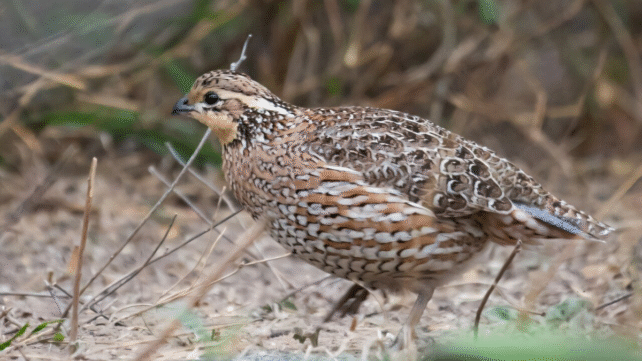
Earth constantly loses heat through the atmosphere and into space, including countless plumes of energy that escape every day from an under-explored, possibly surprising source: birds.
Yet as human-driven climate change skews this heat exchange and increasingly warms our planet, understanding how birds regulate their body temperatures is essential for their conservation, as well as ours.
In a new study in avian thermodynamics, biologists and engineers teamed up to measure how much heat and other types of electromagnetic radiation birds absorb, emit, and reflect into the environment.
"It's exciting to learn that the feathers of birds are evolving to shed heat into outer space to track climatic challenges," explains Terry McGlynn, a biologist at California State University, Dominguez Hills, a co-author on the study.
This refers to infrared heat that can pass through parts of Earth's atmosphere, rather than a direct transfer into space.
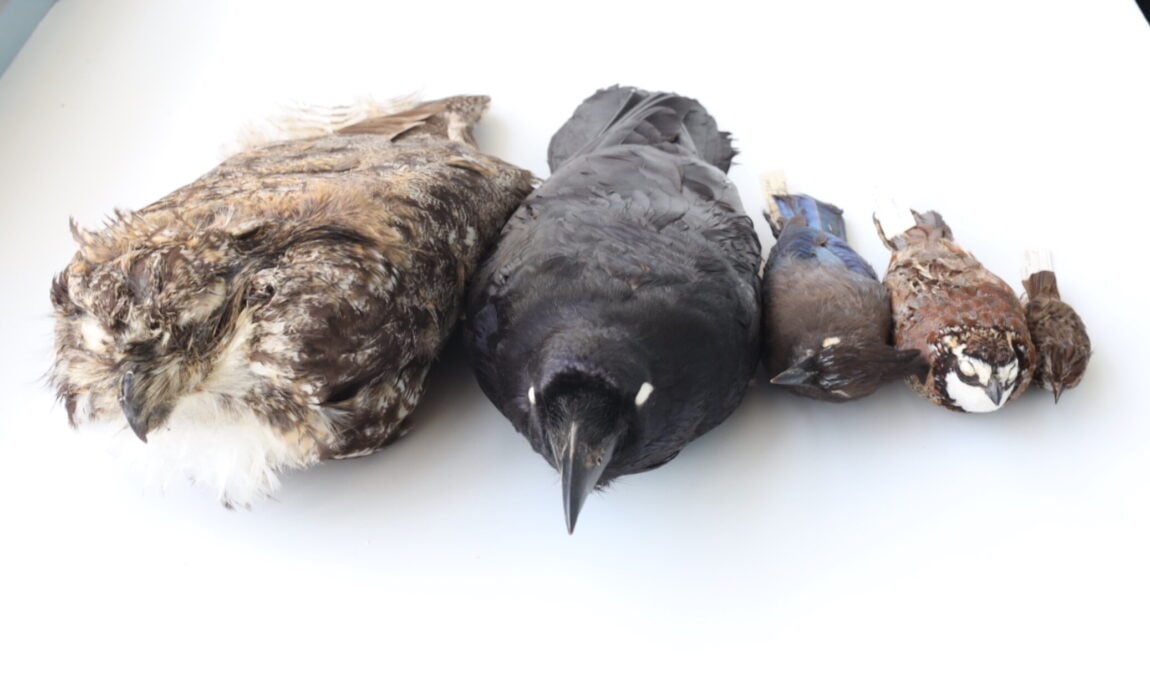
First, the researchers collected museum specimens of five bird species (great horned owl, common raven, northern bobwhite, Steller's jay, and song sparrow) from the Natural History Museum of Los Angeles County, including three to four subspecies of each from diverse climatic regions across North America.
The researchers then used a UV-Vis spectrophotometer to measure how much light the birds absorbed in ultraviolet-to-visible wavelengths – brewers also use this device to check the color and quality of their beers.
In the ornithological domain, visible light coloration helps birds achieve the three big Cs: camouflage, communication, and keeping cool.
But it's not the whole thermal story because heat, or radiation in the infrared wavelengths, is invisible – both to humans and birds. Incidentally, these are similar to the infrared wavelengths observed by the JWST to reveal the Universe.
And no, the researchers did not use the world's most powerful space telescope to stare at their birds. But they did use a shared technique to analyze how the birds' feathers reacted to various wavelengths of infrared light, hence the interdisciplinary team-up to secure spectrometers.
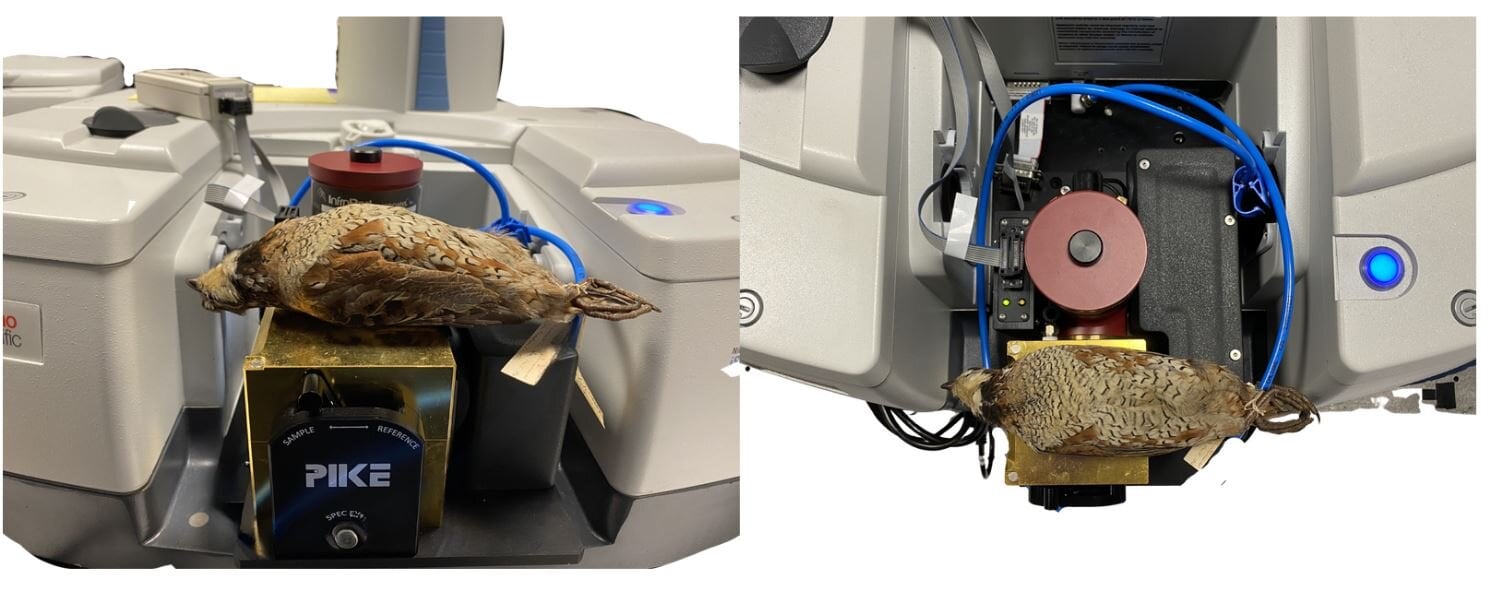
"It's hard to get access, and also many engineers don't want dirty biological materials in their very fancy, expensive equipment," clarifies Allison Shultz, the curator of ornithology at the Natural History Museum of Los Angeles County and study co-author.
Overall, the bird specimens from warmer climates or lower latitudes closer to the equator exhibited reduced absorptance across ultraviolet and near-infrared wavelengths, consistent with a thermal adaptation to reduce heat stress.
As per another experimental hypothesis, birds that live in the open and are exposed to the sky and the Sun should dissipate heat more effectively than forest birds. Accordingly, the grassland- and prairie-preferring bobwhites displayed the highest emittance in mid-infrared radiation. These ground-dwelling quail may therefore emit slightly more infrared heat than other birds.

"Whenever you go outside, and you don't have a ceiling, a roof, or a tree over your head, because space is so cold compared to Earth, heat is being emitted into space," says Shultz.
"If you're living out in the open, if you're a grassland bird, for example, you are exposed to the sky quite a lot of the time. So that might be a larger selective pressure for you."
Numerous other findings emerged. Owls absorb less radiation across wavelengths and also show the greatest variability in reflectance, compared with diurnal birds, perhaps due to relaxed selective pressures since owls are nocturnal.
Yet, counterintuitively to thermal hypotheses, ravens in warmer climates showed higher radiation absorptance, despite often inhabiting open areas like bobwhites. Even though the darker raven plumage absorbs more solar radiation, it may keep it closer to the feathers, where it can more easily escape, rather than being absorbed into the body. Darker plumage may also be thermodynamically favorable for birds that engage in faster, more frequent flights.
Related: Owl Wings Glow Pink And It Could Be Sending a Secret Message
Finally, some birds like bobwhites support a "best of both worlds" hypothesis, as they remain well-camouflaged in visible light while reducing heat stress through adaptations in how much infrared radiation they absorb, emit, or reflect.
Perhaps most importantly, this study offers more evidence of how we can learn from nature to save nature.
"A 'hot' topic in thermal engineering is to create passively cooling structures," says Thomas Lee, a mechanical and aerospace engineer at UCLA and the study's co-lead author, "and it's no secret to engineers that nature contains some of the most optimized, multifunctional adaptations that we would want to replicate."
This research was published in Integrative Organismal Biology.