Cockroaches tend to be thought of as the creatures that keep on living through anything, in part due to their DNA – which can code for all kinds of useful survival tricks, from neutralizing toxins to limb regeneration.
Now a study led by researchers from the University of Sydney has taken a fresh look at the cockroach genome, finding something rather surprising.
It seems these insects have borrowed vast amounts of DNA from an entirely different species.
That species is the bacteria Blattabacterium cuenoti, previously known to live inside cockroaches and help in nitrogen recycling – but not previously known to be transferring tens of thousands of DNA fragments to its host.
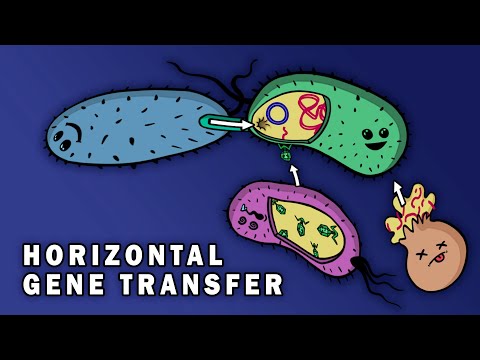
The transfer of genes between species is technically known as horizontal gene transfer (HGT), and it's often seen in bacteria and microorganisms.
While there is also evidence of it in complex animals and plants (eukaryotes), this had been thought to be far less common.
"We identified numerous chimeric inserts comprising up to nine short segments from different locations in the B. cuenoti genome," write the researchers in their published paper.
"Our findings indicate pervasive HGT in eukaryote genomes, with potentially far-reaching implications for adaptation and speciation."
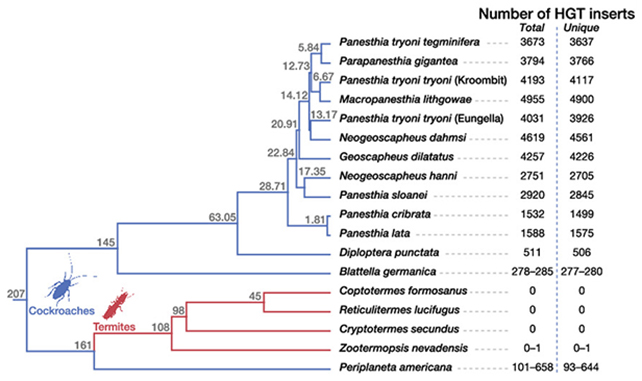
The researchers analyzed the complete genomes of 18 cockroach and termite species. Termites and cockroaches are closely related and share common ancestors, but when they branched off from each other on the evolutionary family tree, most termites lost B. cuenoti.
Unlike most studies of this kind to date, the analysis included looking for smaller, non-coding fragments of DNA that don't build proteins – fragments that had been overlooked by previous scans looking for more complex DNA.
The search turned up 40,485 bits of B. cuenoti DNA in total, ranging from 93 to 4,900 depending on the insect. Before now, the most horizontal gene transfers found in a eukaryote had been less than 300.
What's more, a selection of these fragments seem to come from the very beginning of the cockroach lineage.
"Some inserts appear to have persisted for ≥28.7 million years in this group, which may reflect functional roles," write the researchers.
Whereas genes are normally passed down from one generation to the next, the horizontal version happens when cells from different species are in very close contact – with the cockroach cells absorbing loose pieces of B. cuenoti in this case.

For the eukaryote doing the absorbing, it can mean a genome that becomes more versatile and robust over time – gaining some molecular powers it wouldn't otherwise have.
However, it's important to emphasize that the researchers don't yet know what these transferred bits of DNA do in cockroaches, if anything – they may even be slightly damaging, just not damaging enough for evolutionary pressures to get rid of them.
"The persistence of numerous inserts over millions of years indicates that they may have assumed functional roles in both genes and intergenic regions, are effectively neutral, or are only slightly deleterious," write the researchers.
As analysis techniques and scientific understanding continue to improve, we're now starting to see quite a few examples of HGT turn up outside of the usual bacteria and microorganism suspects.
What this study shows is there's lots more to discover. Many other animals have symbiotic relationships with bacteria, so this could be happening on a much larger scale than anyone previously realized.
Related: Couples Share a Surprising Percentage of Gut Bacteria That May Impact Health
As well as extending their studies to other species, however, the researchers also want to dig deeper into the cockroach genome – to find out if any of these 40,485 borrowed DNA fragments are actually doing anything useful.
"Our results reveal extensive horizontal transfer of DNA from prokaryote symbionts to eukaryotes," write the researchers.
"Future research on cockroaches and other species harboring obligate endosymbiotic prokaryotes will help to uncover any functional effects of inserts, providing a more comprehensive understanding of how HGT shapes genome evolution."
The research has been published in PNAS.