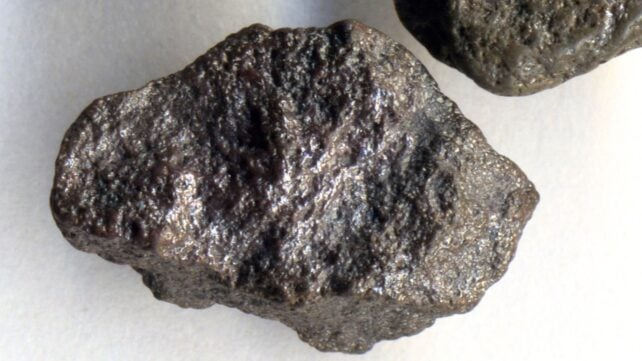
Imagine picking up a black stone from an old riverbed in Brazil. Its surface shines like glass, but inside it is riddled with tiny holes.
Break it open and you would find not one crystal, but a tightly packed mass of miniature diamonds.
Where did this strange stone come from?
Known as carbonado, these porous black diamonds are found in Brazil and Central Africa. No one has identified the rock in which they originally formed.
Their shiny surfaces once led some researchers to wonder whether they came from space, or were made during a violent cosmic impact.
They are unlike the clear, single crystals cut for jewelry. A carbonado grain can hold many openings and a patchwork of minerals, each potentially left by a different stage of its past.
Reading those traces is rather like piecing together a journey from the marks on a well-traveled suitcase.
Now a study offers a different journey. An ancient impact may have helped carry carbon-rich material deep into Earth.
The diamonds could have formed there, in the mantle, before rising back toward the surface.
In this account, the collision starts the story; it does not directly create the diamonds.
To investigate, Attila Demény, Péter Németh and colleagues studied carbonado from Brazil's Tombador Formation. They examined the carbon, scanned the stones with X-rays and examined selected grains under electron microscopes.
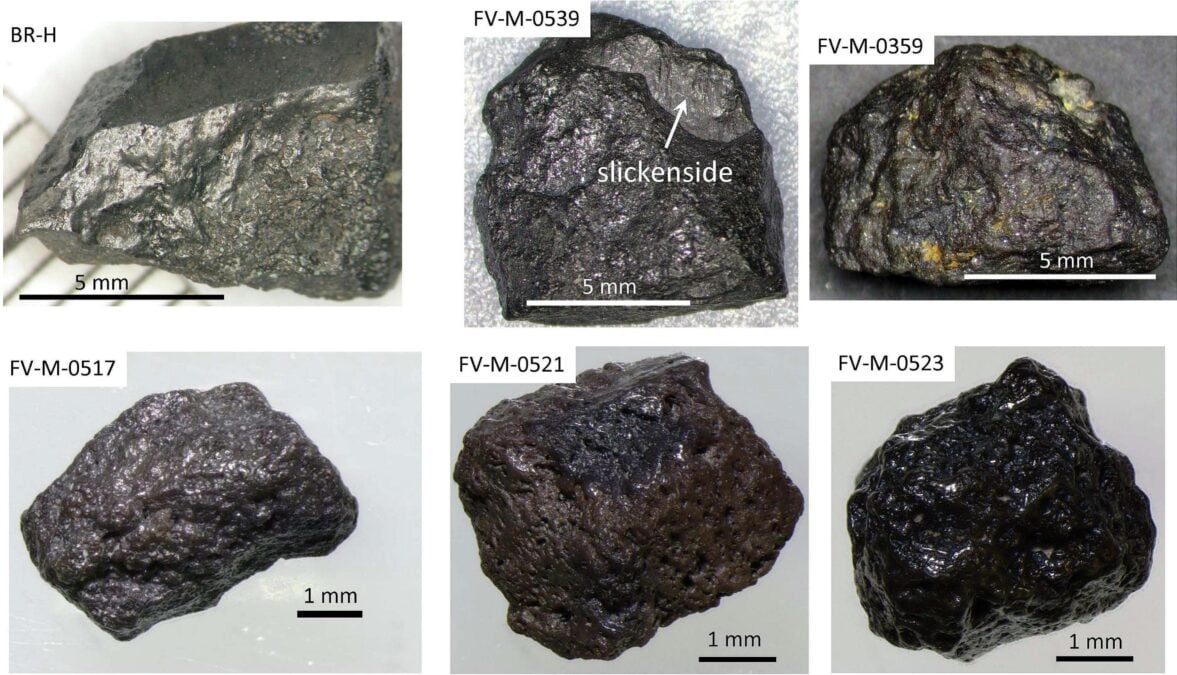
The glassy surface was their first puzzle. It had been likened to a meteorite's melted outer crust. If an impact had produced that finish, it should have left signs in the diamond's microscopic structure.
Instead, ordinary diamond crystals continued through the surface, with no shock-related structures in the grains examined. Some stones also carried a thin coating of anatase, a mineral made of titanium dioxide. Beneath it, individual diamond crystals were preserved, while the smooth finish extended across both the coating and the exposed diamond.
"The formation of the glassy surface had to post-date this mineral precipitation," Demény told ScienceAlert.
That sequence suggests the coating appeared first. Later, fluids may have dissolved a little of the diamond and the coating together, smoothing their surfaces. The shine could therefore tell us about a later episode in the stone's history, rather than how the diamond first formed.
To investigate where the diamonds' carbon came from, the researchers measured the proportions of different forms of carbon. In most stones, those proportions resembled carbon left behind by ancient living things. One grain had a result between typical carbonado and diamonds formed deep inside Earth. Its carbon may have come from a mixture of sources.
But how could material that began at Earth's surface reach the depths needed to make diamond?
"The only way is subduction, which had to be very rapid, otherwise the pores within the diamond should have been eliminated," Demény said. Subduction is the process in which material from the surface sinks into Earth's interior. In the team's model, a swift descent helps explain why the diamonds still contain so many holes.
The researchers propose that a large collision on the young Earth could have set such a descent in motion. "It is also known that Earth was bombarded by extraterrestrial bodies reaching 100-200 km, which may have induced rapid subduction," Demény said.
Organic-rich sediments swept downward could have reached the mantle, where immense pressure transformed some of their carbon into diamond. Rising magma might later have broken apart the diamond-bearing rock and carried pieces upward. Other minerals entered the pores; erosion deposited the fragments in sediments, where fluids later smoothed their surfaces.
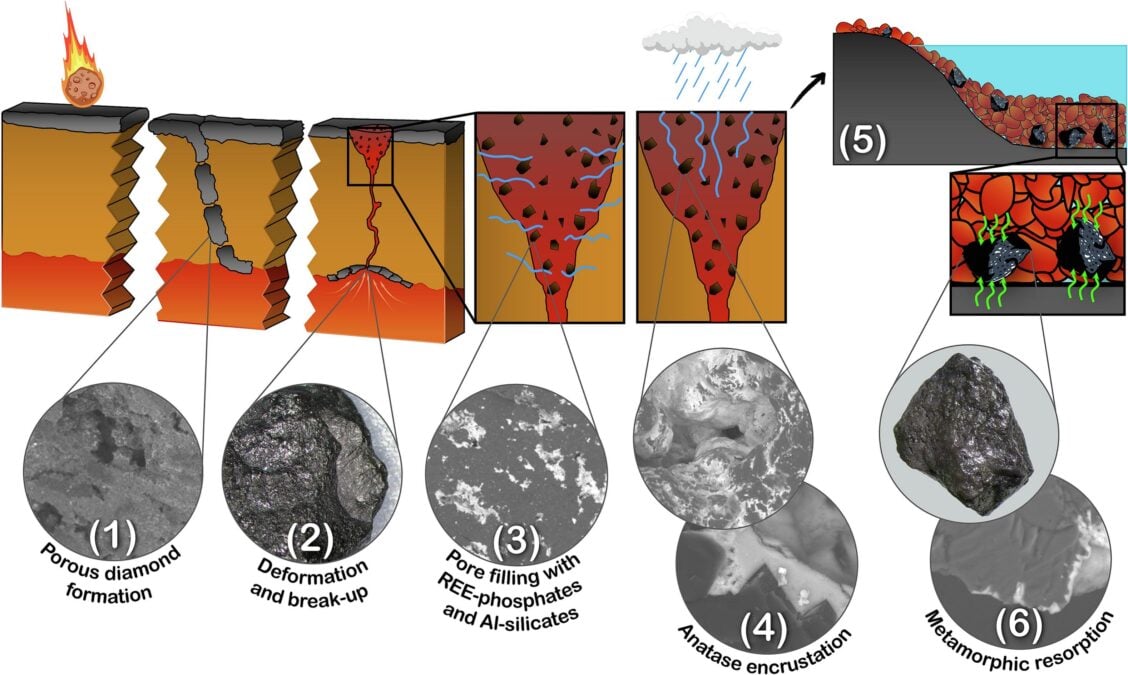
The proposed journey helps connect several peculiarities of carbonado: the carbon it contains, its pores, its broken appearance and its mineral-filled spaces.
A previous study also described a specimen containing carbonado with a gem-quality diamond growing over it, which Demény said supports the idea that carbonado could have spent time in the mantle.
There is a precedent for organic carbon ending up in diamonds deep within Earth. Other research has explored how asteroid impacts affected the young planet. Neither finding establishes the full journey proposed for carbonado, but both show why the clues held in these stones are worth examining.
The researchers have not identified a particular impact associated with carbonado.
They have also not found a mineral trapped inside their samples that definitively shows crustal material entered the mantle before the diamonds formed.
Demény said such an inclusion would provide an especially useful test. The surface may also have been smoothed before erosion; timing remains uncertain, while organic origin and impact-driven descent remain hypotheses.
What the study establishes more directly is the order recorded at the stones' surfaces: the anatase coating came before the glassy finish, which is consistent with later dissolution by fluids.
The research has been published in Gondwana Research.
This article was fact-checked by Fiona MacDonald and edited by Fiona MacDonald. While we pride ourselves on our process, we are only human. If you spot a mistake, please let us know.