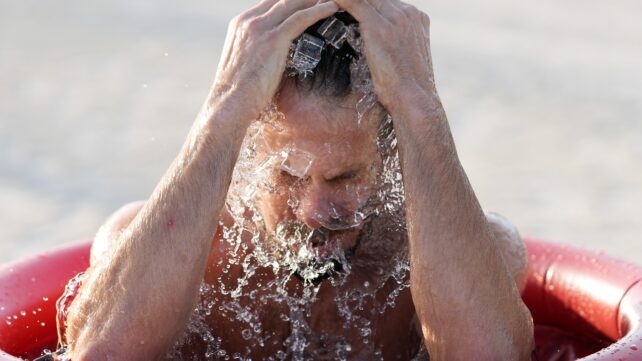
Cold water can do some amazing things to the human body, and the fitness world has taken notice.
Ice baths – also known as cold water immersion – have been a popular fitness and wellness trend in recent years, with many athletes and enthusiasts embracing cold plunging, in the belief that it can accelerate muscle recovery and boost athletic performance.
But do ice baths really work?
A giant new review in Sports Medicine – Open might well be the most comprehensive assessment of cold water immersion to date, and it suggests cold plunging does have health benefits for athletes – but those benefits come with some caveats too.
"Cold-water immersion is not a one-size-fits-all recovery tool," says lead author and exercise researcher Erfan Berjisian from Edith Cowan University (ECU) in Australia.
"Its benefits depend heavily on the athlete's goals, the type of exercise completed, and when the next performance session is scheduled."
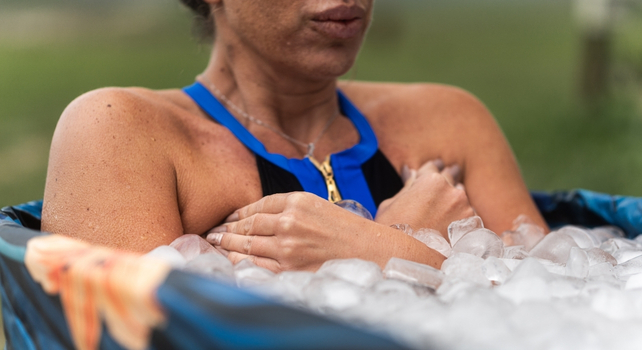
In the study, Berjisian and fellow researchers undertook an umbrella review of scientific literature on ice baths, examining 15 published reviews and meta-analyses, which covered 161 individual studies and 3,210 participants.
While that huge body of research measured lots of different things in lots of different ways – and not all of the studies were of necessarily equal quality – in broad terms, the evidence consistently suggests that post-exercise cold water immersion reduces muscle soreness.
Ice baths can provide relief from soreness after exercise for up to four days, the findings suggest, with the greatest benefits after high-intensity exercise.
But the benefits go beyond how your muscles feel.
The researchers also found that cold-water immersion reduces levels of creatine kinase in the bloodstream, which is a marker of muscle damage, with the effects evident from about 24 hours to 72 hours.
Ice baths also appear to help the nervous system return to its resting state more quickly after exercise, with cold-water immersion producing improvements in heart-rate variability, although the researchers found no consistent reductions in two key markers of inflammation.
As for actual athletic performance, the benefits are more complicated, and depend largely on timing.
Cold-water immersion appears to temporarily improve endurance performance, but only if athletes do exercise straight away – within the first hour after immersion – with the benefits generally disappearing after that.
For some athletes, that tight timeframe might be advantageous though.
"Cold-water immersion appears especially useful when recovery time is limited, such as during tournaments, congested competition schedules or repeated high-intensity training sessions," Berjisian says.
Benefits to muscular power and jumping performance, however, could be seen 24 to 72 hours after exercise, suggesting ice baths might help athletes recover between demanding workouts.
There's a catch, though. In the first few hours after immersion, explosive performance actually seems to get worse, possibly because cooling temporarily reduces the ability of muscles to generate force.
"If athletes need to perform high-speed or explosive movements soon after cooling, cold-water immersion may be counterproductive unless sufficient re-warming occurs," says co-author and ECU exercise scientist Kristina Kendall.
But there's an even bigger downside for those trying to build muscle, with research suggesting that ice baths after resistance training can blunt hypertrophy, resulting in smaller gains in muscle size and strength over time.
"Cold water immersion attenuates gains in maximal strength, strength endurance, and ballistic performance when applied repeatedly after strength training," the researchers write in their paper.
"These outcomes align with mechanistic evidence of reduced muscle protein synthesis and dampened anabolic and ribosomal signaling and satellite cell activity when cold water immersion follows resistance exercise."
Because of these limitations, the researchers suggest that while ice baths can provide benefits for athletes, the practice needs to be matched to the individual needs of each athlete at a given point in time, and cold water immersion should "not be viewed as an inherently beneficial or harmful intervention".
If you've read the terms and conditions and still want to take the plunge, the team recommends 10–15 minutes in water at 10–15 °C (50–59 °F) for optimal results, or a colder 5–10 °C (41–50 °F) to help reduce muscle damage and improve jump recovery.
The findings are reported in Sports Medicine – Open.
This article was fact-checked by Fiona MacDonald and edited by Fiona MacDonald. While we pride ourselves on our process, we are only human. If you spot a mistake, please let us know.