
Space rocks like Bennu contain key genetic ingredients such as sugar, which they delivered in explosive fashion to provide early Earth with another source of life-friendly materials.
Ribose is one such bio-essential sugar, some of which may have arrived from space before terrestrial processes could start making it.
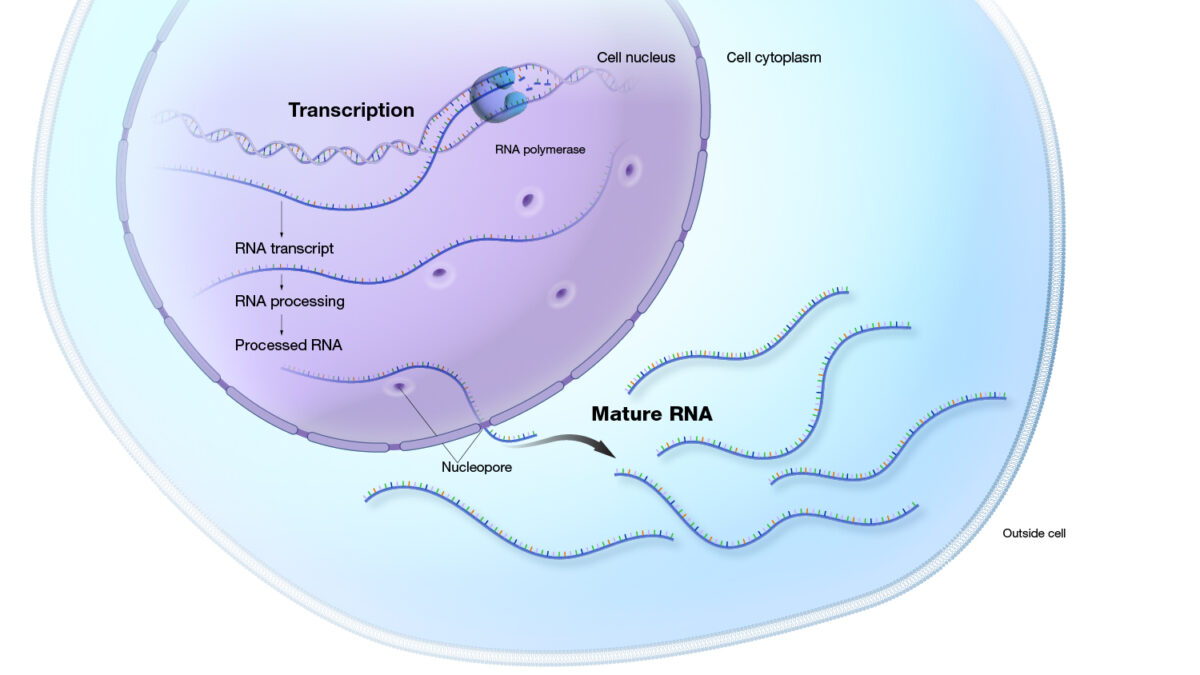
It's the R in RNA, ribonucleic acid, physically comprising its backbone, while a modified version lends skeletal structure to DNA, deoxyribonucleic acid.
DNA is more famous, but while it stays snugly secure in our cells' nuclei, the single-stranded, callous-palmed RNA travels to the body's job sites to share genomic data, build proteins, and regulate gene activity.
But there's a problem: ribose is fragile. Somewhat like table sugar, heat and other factors turn it into caramel – not the delicious stuff, but a tar-like "brown goop."
This is not ideal, even though we humans comprise (and create) many goop-like substances ourselves.
Yet this may present a problem no longer: life scientists have reported a potential breakthrough in the geochemical puzzle that aims to explain how chemistry became biology, and life arose from the muck.
According to a new study in Scientific Reports, astrobiologists and chemists from the University of New South Wales in Australia found ancient ribose may have been kept from caramelizing by an unassuming elemental agent – one that ribose itself helped keep available.
That element was the metalloid boron, which also provided a hint of long-evaporated water on Mars.
When ribose and boron compounds meet, they form complexes.
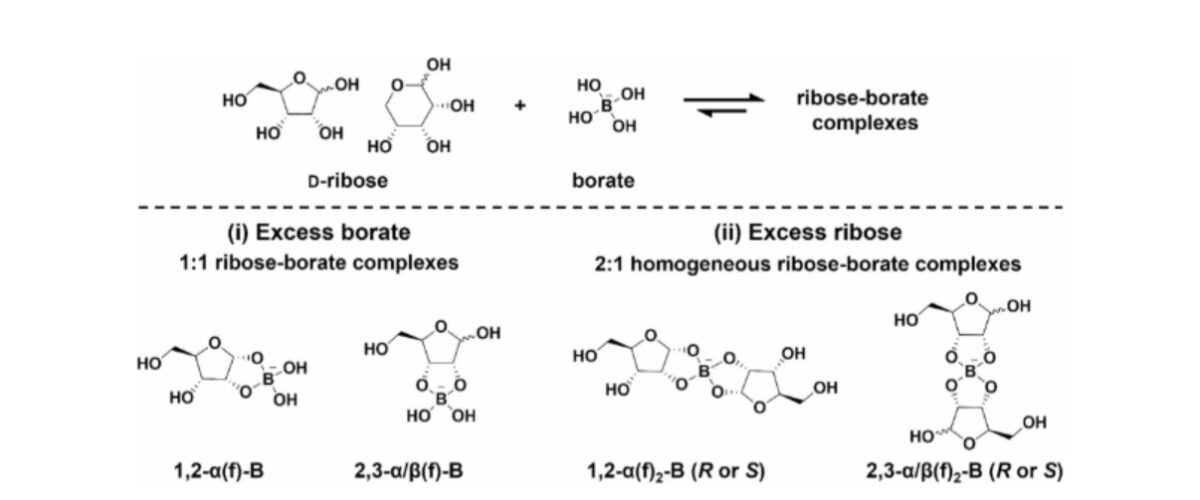
But the availability of boron is also fragile. It can be pulled from the water and locked away in rocks – and therefore made useless for burgeoning lifeforms – by things like calcium.
Accordingly, many studies over the past two decades have explored various ribose-boron interaction scenarios.
But, based on their methods, some of these "experiments may therefore not reflect realistic early Earth environments," the researchers note.
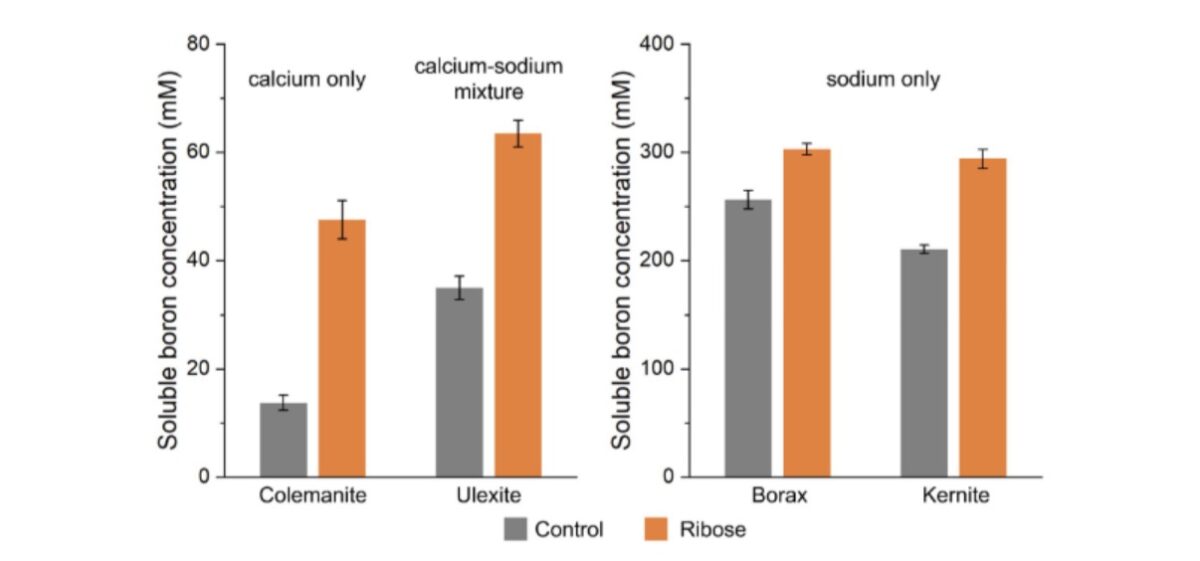
So, alongside standard lab-grade borax, they used common 'real-world' boron-containing minerals: kernite, colemanite, and ulexite – which also contain either sodium, calcium, or both – to test how boron dissolves into water based on what kind of mineral it comes from.
They did so without and with the inclusion of ribose, with the former condition acting as a control.
Lo and behold, the addition of ribose changed the interaction between boron and calcium in a vital way.
While calcium would sequester boron in stubbornly insoluble rocks, turning this tandem into a chemical love triangle by introducing ribose provides the solubility solution.
The ribose helped pull boron from its rocky prison into water across all four minerals that the researchers used – and it was especially effective for those containing calcium.
The team then repeated the experiment using a piece of "puffy evaporative crust" collected from the high-altitude Puga hydrothermal system in Ladakh, India, for a chemical early Earth analog.
When they dunked this substance in water, without ribose, a certain amount of boron was released. When they then added ribose, the amount of boron released into the water increased by approximately 60 percent.
Then the researchers explored whether degraded ribose could improve boron solubility.
After they 'caramelized' their ribose through heat and alkalinity, or chemically, they found only a slight increase in the absolute amount of dissolved boron in the solution.
Although dissolved boron concentration from colemanite increased by 50 percent with the addition of caramelized ribose, that was a much smaller boost than fresh ribose gave the same mineral (about 3.5 times more boron), suggesting that fresh ribose is best.
Finally, the researchers similarly tested sucrose and glucose, finding that they can improve boron solubility but not as much as ribose. This is likely because the molecular geometry of ribose is especially well suited to forming stable complexes with boron.
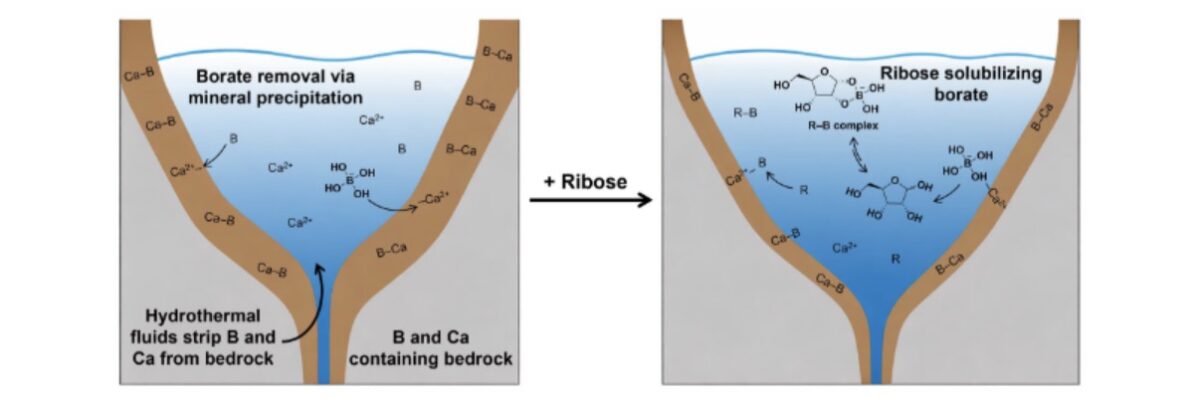
So, the researchers propose the following loop.
Ribose pulls and protects boron, which then protects ribose. So more ribose could lead to more dissolved boron, which could then help more ribose survive, setting the stage for the RNA World Hypothesis and, eventually, us.
But wait a second. The study also presents an intriguing nuance: boron compounds are double-edged swords. They can stabilize existing ribose, but in excess they actually inhibit ribose from forming in the first place.
In this context, calcium suddenly becomes a villain-turned-hero: It may have kept boron levels low, so ribose could form, and then the aforementioned loop possibly took over.
Finally, shifting pH levels, as may be common in hot spring systems, may have helped liberate ribose from the boron, allowing it to undergo other reactions, like, again, us.
So this work shows the value of using natural mineral samples, rather than pure, synthetic materials, even though the latter help maintain control and reduce experimental complexity.
As a result, we come full (or semi) circle to Carl Sagan's quote about us all being star-stuff – specifically, space sugar.
Sure, our susceptibility to sugar's soothing sweetness introduces many health effects. But maybe it also provided the physical fulcrum that helped us exist and attempt to enjoy it in moderation.
The research has been published in Scientific Reports.
This article was fact-checked by Rebecca Dyer and edited by Rebecca Dyer. While we pride ourselves on our process, we are only human. If you spot a mistake, please let us know.