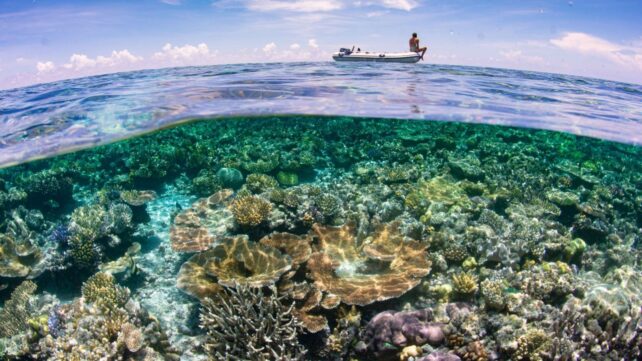
The Great Barrier Reef has an even wider diversity of corals than we knew, according to a new genetic analysis that has led to 12 Acropora species being 'resurrected'.
The research is published in the journal Invertebrate Systematics.
Before gene sequencing technology came along, it was tricky to know where one species ended and another began.
All that 19th- and 20th-century scientists had to work with was the visual information from the specimens they collected on field trips. Pieces of coral were dragged up, left in the Sun, and bathed in household bleach to remove their living tissue, leaving behind only the crystalline aragonite coral 'skeleton'.
Scientists studied the shape of these coral skeletons closely, comparing bleached pieces to a single 'type specimen' to decide if it was a match.
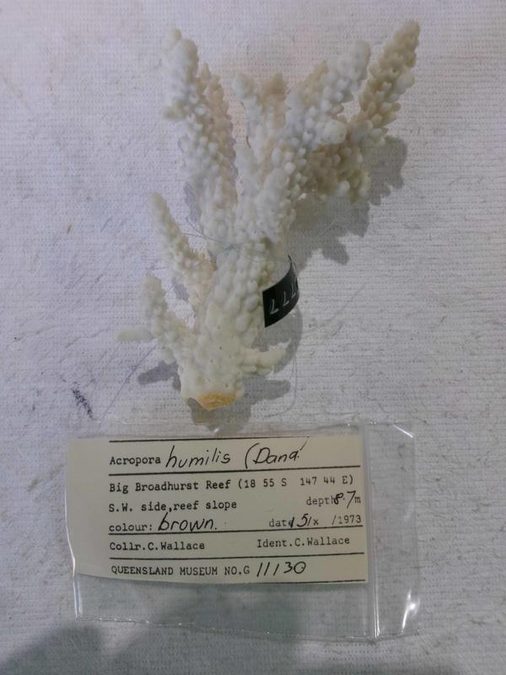
"When you're holding that [type specimen], that's when you're 100 percent sure you're holding that species," Queensland Museum's principal scientist Peter Cowman told ScienceAlert.
The Queensland Museum in Australia holds one of the world's largest collections of coral specimens.
But the skeletons that make up that collection pose a problem for modern scientists trying to improve our knowledge of coral species. Coral skeletons don't contain DNA, so it's impossible to use the old museum specimens for genetic analysis.
In the late 20th century, a new batch of scientists reviewed the many coral specimens in the archives, and in many cases, decided there was too much overlap.
Corals that had been given different names – and therefore separate identities – were in fact members of the same species, they thought.
Many species were merged in this 'synonymization' process, without the help of DNA.
But the new research, led by Augustine Crosbie of James Cook University in Australia, confirms that 12 Acropora corals were distinct species all along.
Four more corals whose identities had remained a mystery have now also been recognized as valid species.
To get the DNA evidence they needed, the scientists had to retrace the steps of their predecessors, right back to the corals' places of origin.
"Now what we're doing is we're taking that little branch off it as a tissue sample that we store in ethanol, in an ultra-low freezer, to keep for a long time," Cowman explained.
"As resources become available, we sequence these things, and we add them to our overall map of the evolutionary history of corals."
Some of the specimens in the new analysis came from the Great Barrier Reef; others came from Fiji, Tonga, the Philippines, and Singapore
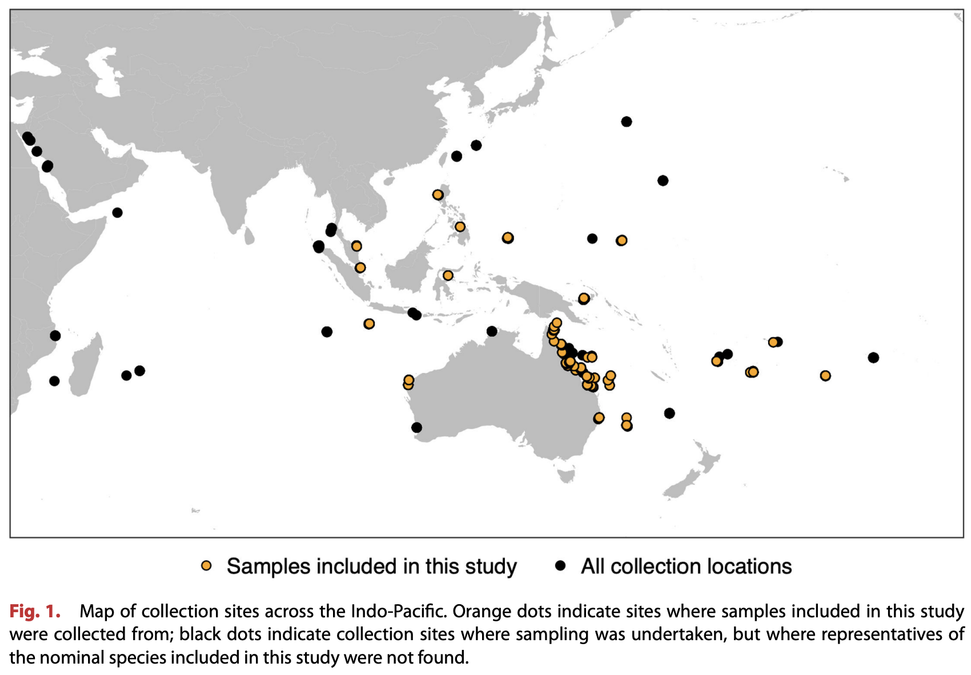
"We try to get a specimen that's from the same type location that looks as close to the type morphology as possible," Cowman explained.
"When we include all these 'topotype' specimens, types from the same topographical location, often they're telling us that there's a lot more species that need to be recognized, and some of these 'invalid' species need to be made valid again."
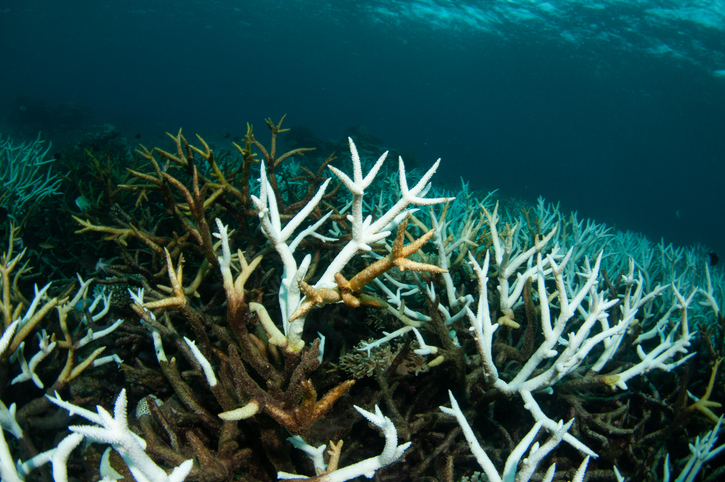
Acropora species have been hit particularly hard by bleaching events in recent years.
The new species discoveries suggest the Great Barrier Reef has a greater diversity of Acropora corals than we realized. But it also means that each of those species may have a much narrower geographical range and is potentially more vulnerable.
"That matters when we assess extinction risk, monitor reef communities and decide where conservation resources should be directed," Cowman says.
"The Great Barrier Reef is one of the best-studied ecosystems on Earth, yet we are still discovering that we have underestimated the number of coral species living there," says James Cook University marine ecologist Andrew Baird, senior author on the study.
"Knowing which species are present is fundamental to understanding, monitoring and protecting the reef's biodiversity."
The research has been published in Invertebrate Systematics.
This article was fact-checked by Fiona MacDonald and edited by Fiona MacDonald. While we pride ourselves on our process, we are only human. If you spot a mistake, please let us know.