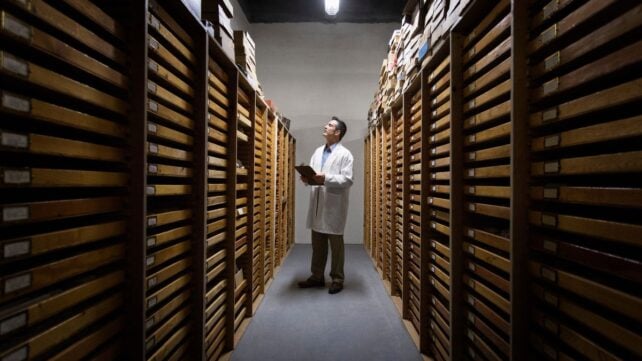
Museums are among the most expansive resources humans have created.
For most of us, these edifices display rich collections of treasures and knowledge that transport us through time.
For scientists, they're a treasure of a different kind.
In vast warehouses inaccessible to the public, many museums store hoards of more artifacts that rarely see the light of day, and were accumulated faster than humans can study them.
That's why so many discoveries are made not in the field, but in museum backrooms, among wonders half-forgotten for decades.
To celebrate International Museum Day, here are some of our favorite recent discoveries that only emerged when the right person came along to make them.
The oldest known whale bone tools
In a bid to make sense of the hundreds of prehistoric artifacts squirreled away in museums across Europe, a team of archaeologists sat down and compiled a comprehensive catalog using a suite of techniques to date the artifacts and find out what they were made of.
Their results yielded around 150 tools made from whale bone, arising from the Magdalenian culture that occupied coastal and inland regions of western Europe some 19,000 to 14,000 years ago – the earliest known of their kind.
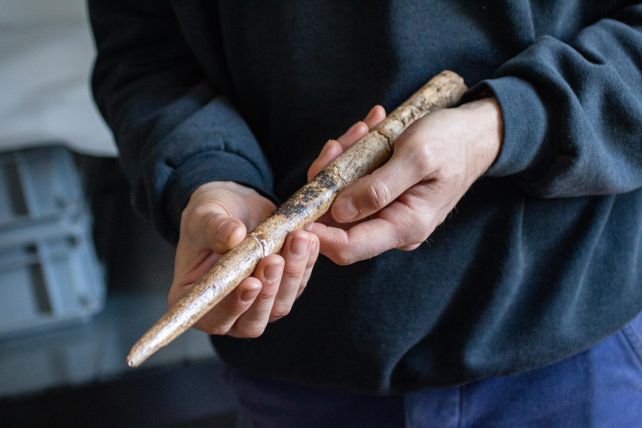
This discovery reveals interesting new details about the whales that once inhabited the Bay of Biscay and how humans interacted with their remains.
"Even old collections, excavated more than one century ago with field methods now outdated, and stored in museums for a long time, can bring new scientific information when approached with the right analytical tools," University of Toulouse-Jean Jaurès archaeologist Jean-Marc Pétillon told ScienceAlert.
Metal from the sky
The Treasure of Villena – discovered more than 60 years ago in 1963 in what is now Alicante in Spain – wasn't exactly moldering away in a storeroom.
As one of the most important examples of ancient goldsmithing in Europe, forged more than 3,000 years ago during the Iberian Bronze Age, it was revered but still somewhat overlooked.
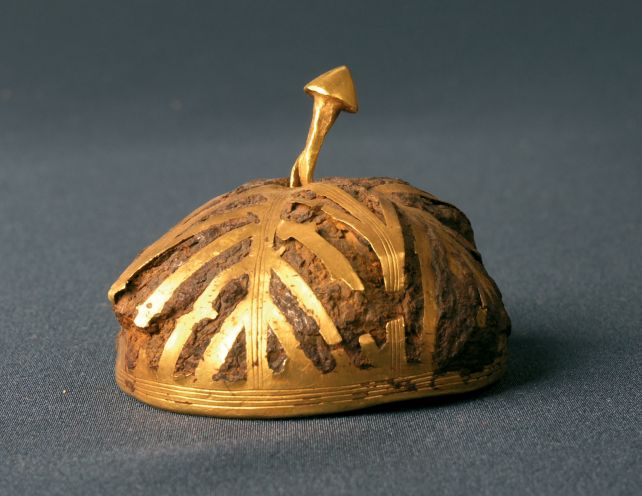
Then, in 2024, it yielded a surprise. Scientists analyzed two oddities in the collection, a bracelet and a hemisphere made from dull brown material – and found they were made, not from earthly metal, but with iron from meteorites that fell from the sky – in a time before the advent of iron smelting technology.
"The available data suggest that the cap and bracelet from the Villena Treasure are currently the first two pieces attributable to meteoritic iron in the Iberian Peninsula," the researchers wrote.

Not a mammoth
It made sense that large bones found inland in the heart of Alaska were identified as belonging to a woolly mammoth and not examined for 70 years.
However, when researchers finally studied the bones as part of a program launched in 2022, radiocarbon dating revealed that the animal that left them lived long after mammoths had gone extinct.
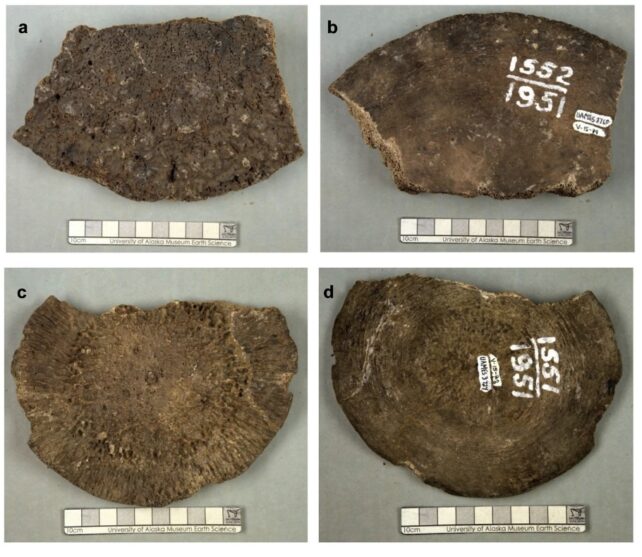
Comparison of the bones' mitochondrial DNA with modern species revealed an even bigger surprise: It was not one animal, but two, and they were both whales.
"How did the remains of two whales that are more than 1,000 years old come to be found in interior Alaska, more than 400 km (250 miles) from the nearest coastline?" the researchers queried.
It's a question that remains to be answered.
Darwin meets lasers
Sometimes it's not the specimen, but the method of studying it that reveals new information.
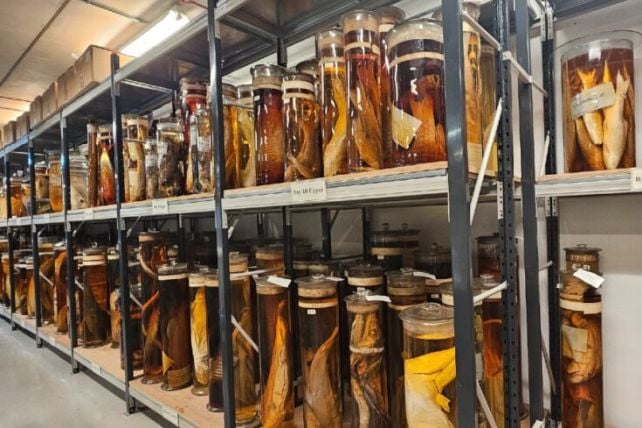
Some 200 years ago, legendary naturalist Charles Darwin collected hundreds of specimens, preserved in sealed jars. The problem is that many different fluids were used for specimen preservation, and it was unknown which of them Darwin had used.
We can't just unseal the jars and take a peek – that could destroy the delicate remains – so, in a paper published in January 2026, scientists detailed the way they used laser light to identify the methods Darwin had used.
Interestingly, he had different fluids for different kinds of animals – and this information, the scientists said, will help them continue to care for these precious specimens for future generations.
A dinosaur herd written in opal
Australia is one of the only places in the world with the right conditions for fossil opalization – the replacement of bone with shimmering rainbow opal.
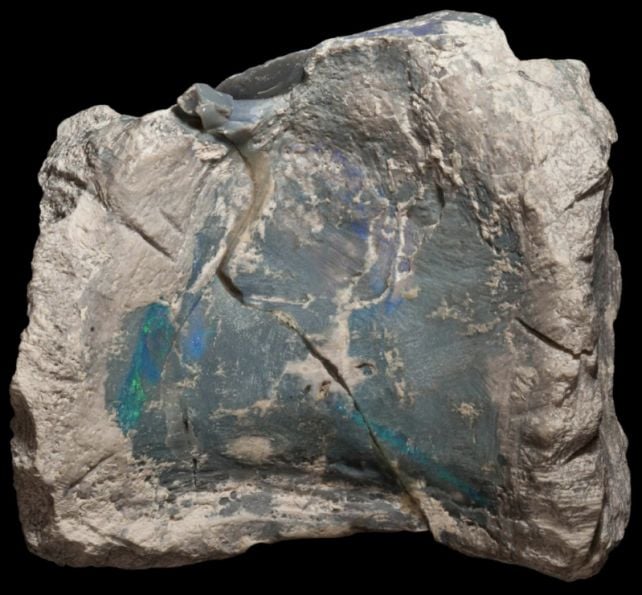
Many of these specimens are stunningly beautiful, but with opal being so valuable, they often have a checkered history. Some are squirreled away in private collections; others get traded; and some go unstudied for years.
A collection of opalized fossils first discovered in 1984 was finally examined by paleontologists decades later, after it was recovered and donated in 2015.
As described in a 2019 paper, the jumble of bones turned out to be the remains of at least four separate animals, all belonging to a previously unknown dinosaur species.
The species was named Fostoria dhimbangunmal. It roamed the eastern flank of Australia during the mid-Cretaceous, in herds large enough that this group stayed together even after death, turning into beautiful gemstones together.
Three-eyed brains
The Burgess Shale truly is a fossil cornucopia like no other. This spectacular, 508-million-year-old fossil bed is so rich that, often, paleontologists can only collect them and put them aside to create an archive that is slowly being worked through.
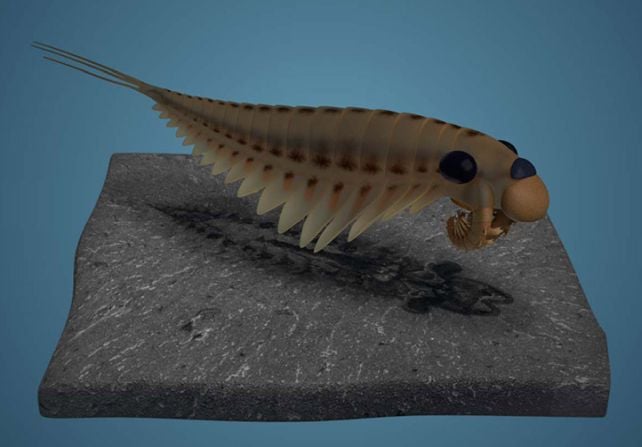
One species, Stanleycaris hirpex, is a strange three-eyed animal known as a radiodont, related to modern arthropods.
Hundreds of Stanleycaris fossils have been collected, but it wasn't until a 2022 paper – two decades after they were discovered – that scientists revealed just how exciting these tiny animals really are.
In 84 specimens from a collection of 268 Stanleycaris fossils, the brain was preserved in exquisite detail – a discovery that shed new light on the evolution of arthropod brains.
"We can even make out fine details such as visual processing centers serving the large eyes and traces of nerves entering the appendages," said evolutionary biologist Joseph Moysiuk of the University of Toronto.

The world has more marvels than we currently have time to examine.
Related: Visiting Museums May Slow Your Biological Aging, Study Finds
While museums offer a place of learning for many of us, for scientists, they provide a place to keep irreplaceable treasures safe until the right researcher arrives to unravel the secrets they hold.