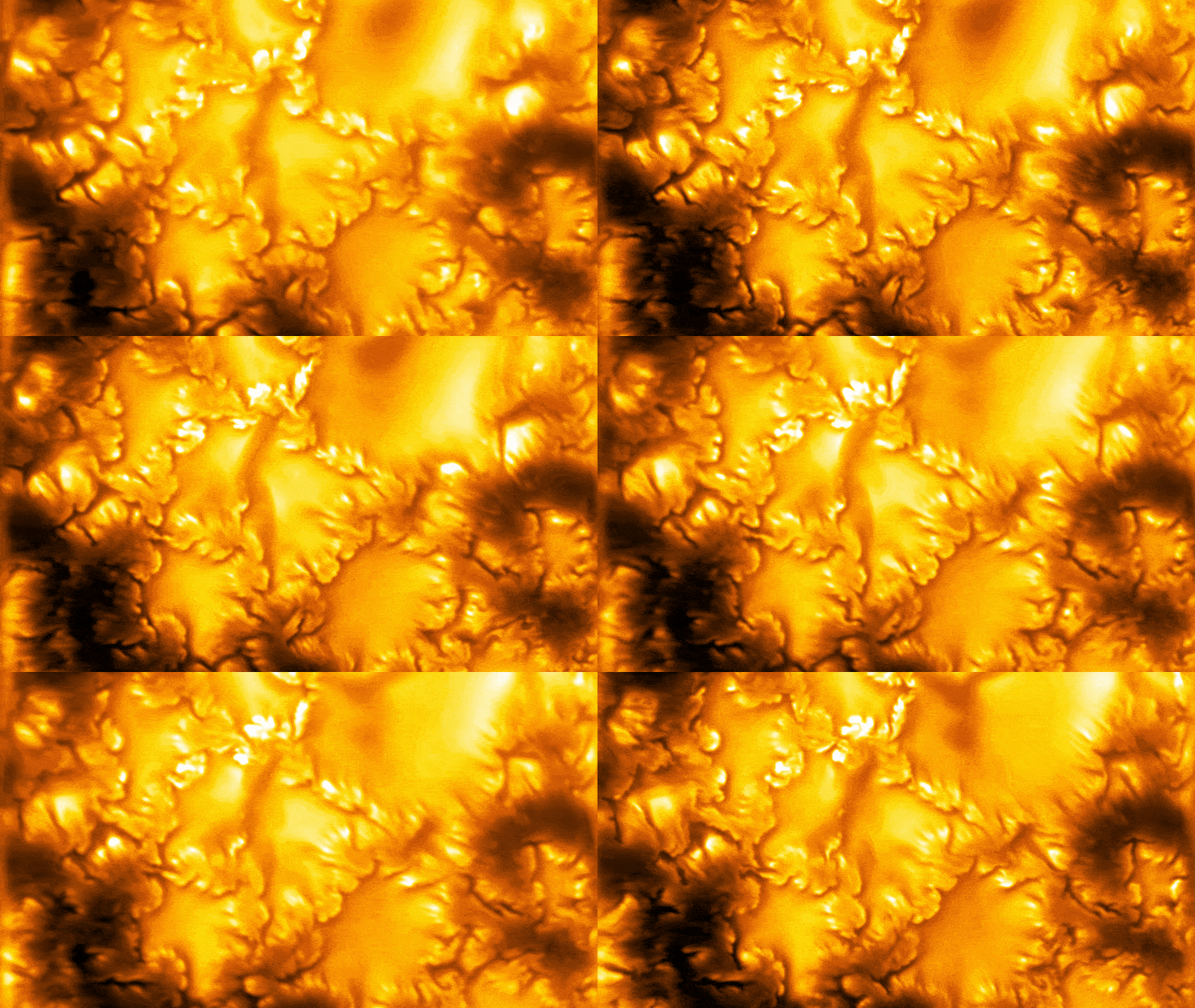
The visible surface of the Sun is defined by turmoil.
Vast towers of heat surge upwards from deep inside the Sun, spreading outwards, cooling, and falling away at the edges of convection cells about the size of Texas.
The most powerful solar telescope on Earth, the NSF's Daniel K. Inouye Solar Telescope located in Hawaii, has already dramatically changed our understanding of the Sun.
Now, it's taken a massive leap forward. In the highest-resolution images of the Sun ever captured, Inouye has exposed a hidden landscape of eddying whirlpools swirling around the Sun's magnetic boundaries.
These features are known as Kelvin-Helmholtz instabilities (KHI). They have been predicted by theory for decades but had never before been observed on the Sun.
The new observations aren't merely a confirmation of the theory, though – they suggest that KHI are not isolated disturbances, but an almost ubiquitous feature of the solar surface.
"We were truly amazed by the incredible amount of small-scale detail and dynamic activity visible in the high-resolution images," solar physicist David Kuridze of the US National Solar Observatory told ScienceAlert.
"What really surprised us was just how many KHI events we found. Seeing how truly omnipresent they are across the magnetic surface was something we really didn't expect at all."
Kelvin-Helmholtz instabilities are spiral-like patterns that form at the boundary where two fluids slide past each other, like ocean waves or certain cloud formations.
Because the Sun's plasma is so turbulent, scientists expected KHI to appear there, too, but previous instruments and observations lacked the resolution to see them.
That changed with Inouye. In April 2025, the telescope was deployed to stare at a magnetically active region not far from a sunspot to capture a timelapse of the solar plasma in roiling action.
"Every major discovery about the Sun adds another tiny piece to a very large puzzle, and the Sun has no shortage of unresolved mysteries."
Solar physicist Friedrich Wöger, National Solar Observatory
When the researchers got the data back and started processing it, they recognized immediately that they were looking at the telltale signs of KHI vortices – but that was the easy part of the process.
"Providing the evidence that 'what looks, walks, and quacks like a duck actually is a duck' is much more difficult, and could only be achieved with the highest spatial resolution data of the solar surface ever acquired, and the most complete and detailed numerical computer simulations ever performed (just for this purpose)," solar physicist Friedrich Wöger of the National Solar Observatory told ScienceAlert.
"It was a very exciting time because the implications could be so far-reaching."
This painstaking work does indeed show that the constantly evolving curlicues in the solar plasma are KHI – but it also goes a step further.
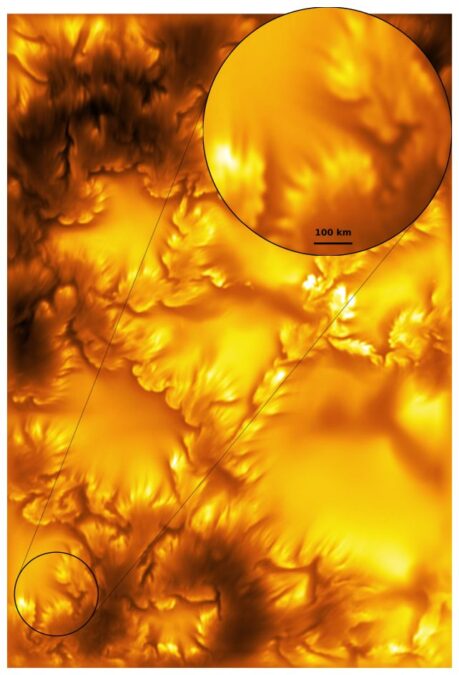
The observations suggest the whirlpools are an almost ubiquitous feature of the boundaries between magnetic structures and the bubbling convection around them. They kept appearing wherever the team looked, forming when fast-moving plasma shears past slower plasma at magnetic boundaries.
The accompanying simulations reproduced the same behavior, suggesting the instability is a common feature of these magnetic interfaces rather than a rare, localized event.
"The real surprise was seeing just how ubiquitous KHI actually is all across the surface," Kuridze said.
"To generate it in a real physical system, you need a remarkably delicate balance between competing physical forces. So discovering that these strict requirements are satisfied practically everywhere at the boundaries of magnetic elements is simply astonishing."
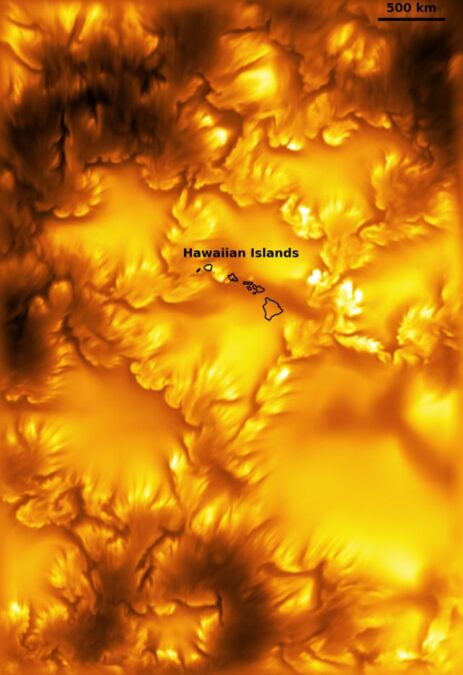
The implications reach far beyond knowing there are pretty whirlpools on the Sun.
If KHI are indeed so widespread across the Sun's surface, they could be influencing the flow of energy through the solar atmosphere almost everywhere – mixing plasma and magnetic fields as they twist and break apart.
Understanding those small-scale processes is an important step towards explaining larger mysteries, such as why the Sun's outer atmosphere is so unexpectedly hot, and what kicks off the enormous eruptions that drive space weather.

"Modern society depends on technologies that are vulnerable to space weather. To better understand and eventually forecast the Sun's most disruptive behaviors, we first have to understand the tiny physical processes that drive it," Wöger said.
"This discovery reveals one of those processes for the first time at a level of detail we have not seen before."
Related: The Longest Journey Sunlight Ever Takes Happens Before It Leaves The Sun
Even after centuries of studying our nearest star, the sharper our view becomes, the more complicated the Sun appears.
Inouye is one of our best tools yet for uncovering the secrets that lurk on its blazing surface.
"This discovery is just one important piece to a much larger picture, whether it be the origin and evolution of space weather events to simply how the Sun functions," Wöger told ScienceAlert.
"Every major discovery about the Sun adds another tiny piece to a very large puzzle, and the Sun has no shortage of unresolved mysteries."
The findings have been detailed in Nature.
This article was fact-checked by Rebecca Dyer and edited by Rebecca Dyer. While we pride ourselves on our process, we are only human. If you spot a mistake, please let us know.