Science may sometimes seem like it's limited to those with access to kilometers-long particle accelerators.
But archaeology may be among the last disciplines where any person can perhaps accidentally discover a lost piece of the past.
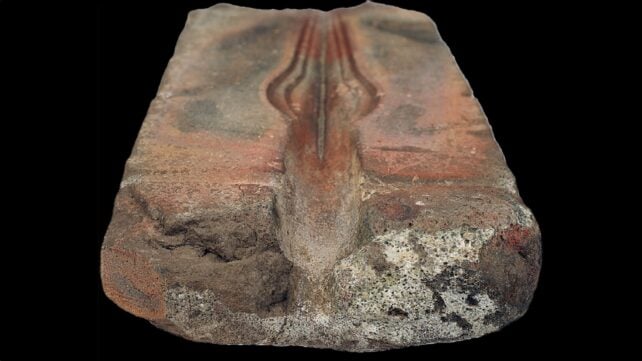
Case in point, a property owner in the village of Morkůvky, in the Moravia region of the Czech Republic, accidentally found a rare ancient Bronze Age spearhead mold while renovating his domain – a priceless piece that had once been used to help hold up an old barn.
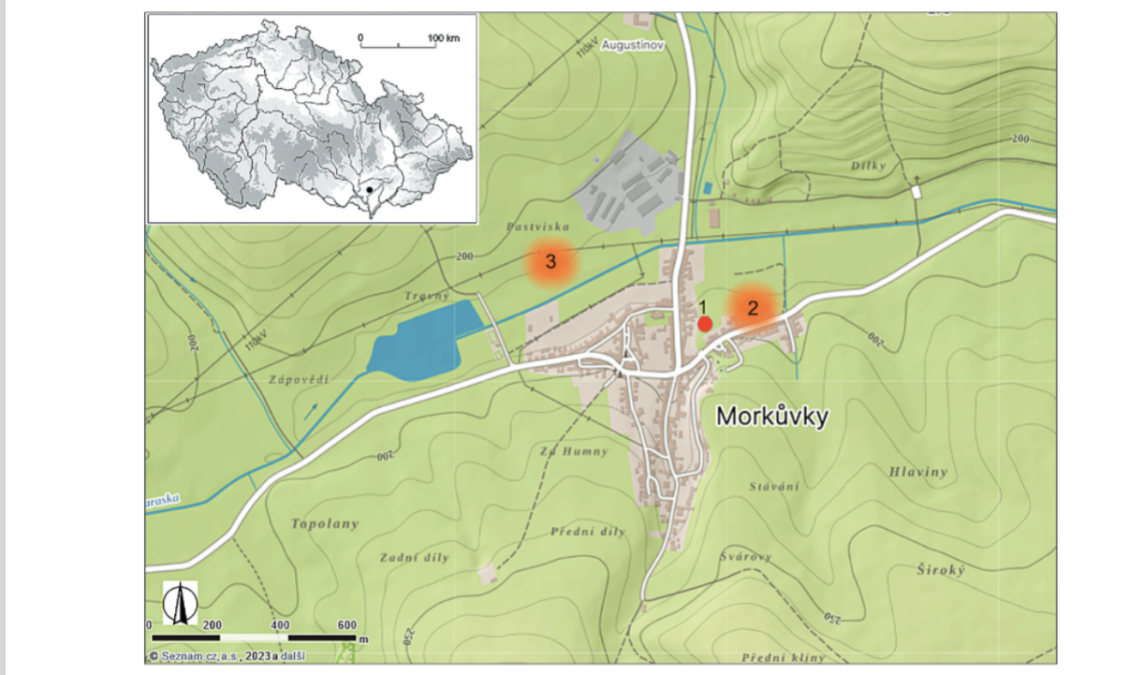
The artifact was found by J. Tomanec when performing earthwork on his property in 2007. As with other intriguing artifacts, it had been hidden under Tomanec's purview – or garden – for who knows how long.
The item in question is a one-half of a spearhead mold made of rhyolite tuff, a volcanic material. It is up to 227 millimeters (9 inches in length) and weighs around a kilogram (2.4 pounds).
In a study featured in the journal Archeologické rozhledy in mid-2025, Czech researchers – including researchers from the Moravian Museum, where the artifact now resides – used X-ray fluorescence (XRF) and X-ray diffraction (XRD) to bombard the mysterious mold with X-rays to reveal its chemical composition and structure.
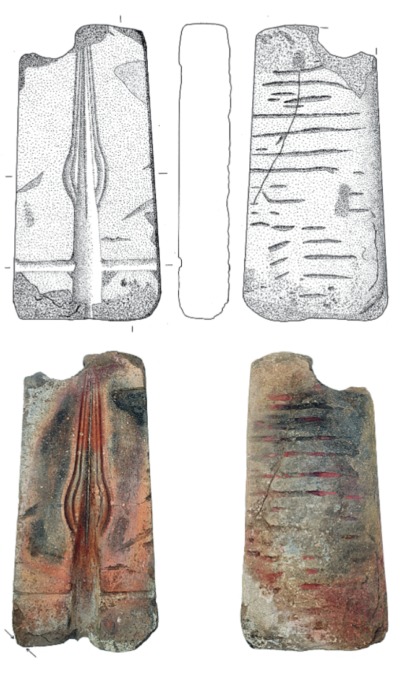
Its many cracks and "glassy bubbly slag" composition suggest intensive use by the supposedly spear-happy metalworkers of the Urnfield culture roughly 3,000 to 3,300 years ago, in the Late Bronze Age.
This serendipitously well-preserved mold would have been used to cast a socketed, longitudinally ribbed spearhead.
Regionally, it's exceptionally rare. Only two other such molds have been reliably documented in Moravia, the researchers note, though such technologies are much more common in the Carpathian Basin, including regions of Hungary and Transylvania.
The mold is part of a type of casting assembly also used for other socketed implements, including arrowheads, axes, and chisels.
It comprised three parts: two halves of the mold, filled with tin bronze and fastened with copper wire, and a metal or clay core used to create the socket so that the casted item could be affixed to a wooden rod.
The rhyolite tuff used to make the mold may have originated around the Bükk Mountains in northern Hungary, volcanically emerging from Earth's gullet around 20 million years ago in a great magmatic upheaval during the Miocene epoch.
It has since solidified into the same type of stuff that forms eye-catching formations like the famous "fairy chimneys" of Cappadocia in Turkey.
Since it was not local, the mold traces an ancient trade route and cultural diffusion across a diverse central Europe, from the Carpathians into Czech lands.
"The casting mold from Morkůvky is thus another reliable and eloquent evidence that the long-distance transport of raw materials used for the production of stone molds could reach tens to hundreds of kilometers," the researchers explain, noting that hundreds of kilograms of copper ingots may have followed similarly lengthy import routes from European mining centers.
However, the mold likely arrived already made, rather than in bulk material form, based on the rarity of its specific type of molded spearheads in Moravia, compared with their relative profusion in Carpathia.
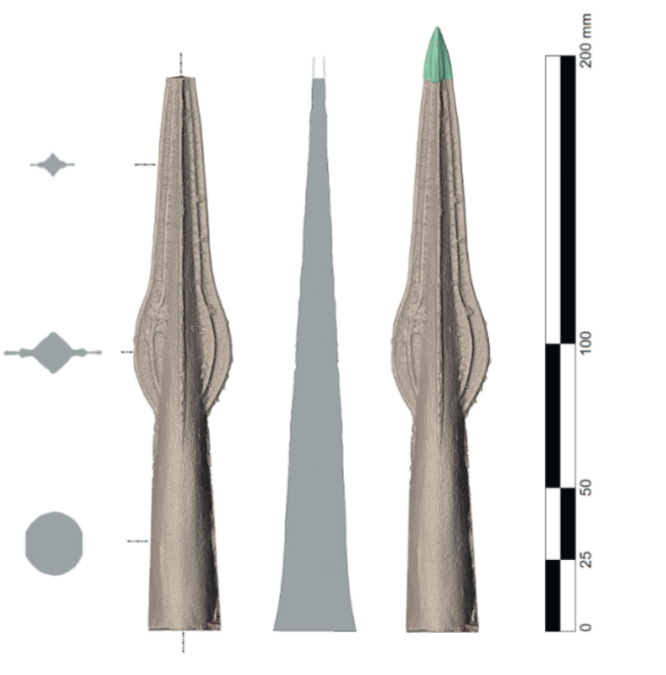
It would have been a rare and prized possession. This tuff is phonetically true to its name, providing a tough, heat-resistant medium from which a crafter could create multi-use molds to furnish their people with untold spearheads, or a panoply of other possibly pointy instruments.
Altogether, this long-neglected mold reveals an incredible temporo-archaeo-cultural journey.
It was locked within the Earth for eons, spewed up epochs ago, turned into a cherished tool in the Bronze Age, unceremoniously used to found a barn, then accidentally rediscovered in 2007, before spending nearly two more decades once again receiving its due dignity.
The research has been published in Archeologické rozhledy.
This article was fact-checked by Rachel Garner and edited by Peter Dockrill. While we pride ourselves on our process, we are only human. If you spot a mistake, please let us know.