A surprising new observational study has found a tentative connection between eating more meat of any kind and a lower risk of developing dementia.
Importantly, however, that outcome was only found among people with a specific APOE4 gene variant, which is strongly associated with Alzheimer's disease risk.
Tracking 2,157 over-60s for up to 15 years, researchers at Karolinska Institutet and Stockholm University in Sweden charted the participants' self-reported diets against their cognitive test scores and any dementia diagnoses.
Plenty of studies have warned about the negative health impacts of processed food, and there was evidence for it here, too.
"A lower proportion of processed meat in total meat consumption was associated with a lower risk of dementia regardless of APOE genotype," says Karolinska Institutet neurologist Sara Garcia-Ptacek.
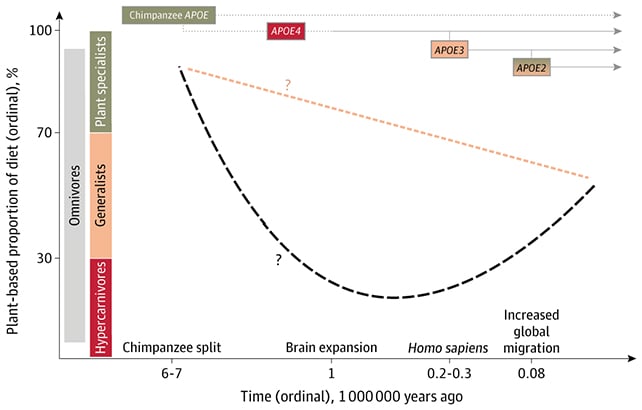
The researchers describe APOE4 as the "ancestral human form" of the APOE gene, which helped inspire the hypothesis that the brains of people carrying either one or two copies of the variant might respond differently to a meat-heavy diet.
But it's important to note that the very idea that our ancestors ate more meat has recently been called into question.
What's more, decades of research, especially on processed red meat, have linked higher meat intake to increased dementia risk, so there's reason to remain skeptical until more studies are conducted.
This new study adds some nuance – and is a reminder that we're all built differently, and exposed to different environments.
"This study tested the hypothesis that people with [APOE4] would have a reduced risk of cognitive decline and dementia with higher meat intake," says Karolinska Institutet gerontologist Jakob Norgren.
That hypothesis was backed up by the observational data. The participants with APOE4 who ate the most meat were significantly less likely to develop dementia, the data showed, while memory decline happened more slowly.
Processed meat accounted for about a third of total meat intake in this cohort's diet. The findings suggest that in some cases, eating meat, even red meat, may be good for the brain.
While it's not yet clear why the newly observed link exists, it does suggest the relationship between diet and dementia risk may not be the same for everyone. The researchers think that people with APOE4 may absorb certain nutrients from meat differently.
For those who weren't carrying APOE4, meat-eating overall wasn't linked to cognitive test scores or the likelihood of dementia developing.
However, the type of meat still made a difference: A higher unprocessed-to-total meat ratio, such as consuming more red meat or poultry, was associated with a lower risk of dementia, regardless of APOE status, compared with higher consumption of processed meat.

The APOE gene encodes apolipoprotein E, a protein that helps transport cholesterol and fats throughout the body, including the brain, which may help explain the connection between APOE4 and Alzheimer's. That's another association that needs more research to be fully understood.
This is an observational study – meaning the researchers tracked what people were already eating and how their cognition changed over time, but they did not assign diets experimentally.
The findings reveal an association between meat and dementia risk, but do not prove that eating more meat prevents dementia.
For now, the study suggests that people with the APOE4 gene variant – around a quarter of the global population – may be able to reduce their dementia risk in different ways.
Related: This Unique Diet Could Slow Your Brain Aging by Over 2 Years, Study Suggests
" Clinical trials are now needed to develop dietary recommendations tailored to APOE genotype," says Norgren.
The research has been published in JAMA Network Open.