
There's a lot more to sleep than just the amount of time that passes between you drifting off and waking up again – and the different facets of our slumber also have different implications for our health.
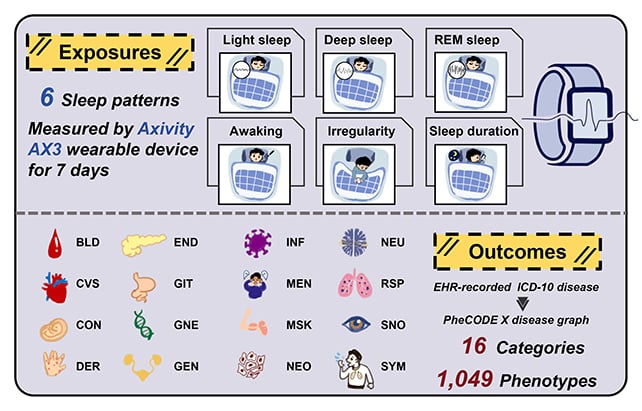
In a new study in PLOS Medicine, researchers led by a team from Capital Medical University in China analyzed data from 95,559 participants in a UK health project.
Wrist-worn trackers were used to map a week of sleep patterns against over a thousand health conditions, with a median follow-up time of almost nine years.
One stage of sleep stood out in particular: REM, or Rapid Eye Movement sleep.
This is a distinct sleep stage, during which we have most of our dreams.
Brain activity during REM sleep looks similar to brain activity when we're awake, and it's thought to help with improved learning and brain development.
Getting more REM sleep was associated with a lower risk of dozens of different diseases, including heart failure, Alzheimer's disease, hypotension, and atrial fibrillation.
"We found that variations in sleep patterns were associated with 156 incidences of diseases," write the researchers in their published paper.
"Specifically, higher amount of REM sleep and deep sleep were associated with lower risks of 83 and 7 diseases, respectively, while greater sleep irregularity and increased wake after sleep onset were linked to elevated risks of 3 and 6 diseases, respectively."
For deep sleep, some of the conditions associated with a lower risk were type 2 diabetes and Parkinson's disease.
Between six and eight hours of sleep a night seemed to be something of a 'sweet spot' associated with a lower risk of a significant number of diseases, note the researchers. Sleeping less than five hours a night was associated with a higher risk of 37 diseases, compared to six-to-eight.
The researchers also looked at the proportion of REM sleep that the participants got, showing that the associations with this type of sleep weren't solely a consequence of more time snoozing.
"These findings highlight that both sleep architecture and sleep duration are associated with disease risk," write the researchers.
While more work will need to be done to know for sure, the researchers think that REM sleep may act on different biological pathways to sleep in general, possibly conferring different benefits and interacting with disease in a different way.
It's now well established that sleep gives the body time to rest, and the brain an opportunity to recharge and reorganize, but knowing more about the specific impact of REM sleep will help inform future studies.

"This framework enables the identification of distinct patterns of association across multiple health domains, thereby offering a more integrated understanding of how real-world sleep relates to disease risk," write the researchers.
While the study doesn't prove direct cause and effect, its use of a large group of people – together with real-world sleep data, rather than self-reported estimates – adds to its significance for sleep and health researchers.
We cycle through different sleep stages across the course of a night, and two key factors influencing how much REM sleep we bank are the total amount of sleep we get and how continuous that sleep is.
Going against our body's natural circadian rhythm, stress, and alcohol can also have a negative impact on the amount of REM sleep that happens, and it also tends to decline naturally with age as well.
Related: This One Habit at Night Could Silently Change The Shape of Your Heart
There's still plenty we don't know about REM sleep – including why animals with a higher body temperature tend to bank less of it – but it's clearly significant when it comes to health. Another reason to think about getting to bed a little earlier tonight.
"The findings underscore that maintaining 6–8 hours of sleep is associated with a more favorable sleep architecture and lower disease risk, offering insights for prevention and health promotion," write the researchers.
The research has been published in PLOS Medicine.
This article was fact-checked by Peter Dockrill and edited by Peter Dockrill. While we pride ourselves on our process, we are only human. If you spot a mistake, please let us know.