
Early signs of cognitive decline may influence our driving habits, making our choices in travel times and routes a potential indicator of future mental health.
Researchers from Washington University in St Louis found that a tendency to drive less often and to stick to familiar paths could herald a need for early intervention for drivers who may be at risk of a future road accident.
Combined with other symptoms, information on a patient's driving may help inform a diagnosis. The team showed how adding data from GPS trackers to standard age and memory tests, along with other demographic factors, enabled the researchers to accurately detect cognitive decline among individuals with preexisting mild cognitive impairment (MCI) 87 percent of the time.
Related: New Dementia Pill Clears First Major Safety Hurdle, Trial Reports
"Early identification of older drivers who are at risk for accidents is a public health priority, but identifying people who are unsafe is challenging and time-consuming," says neurology researcher Ganesh Babulal.
"We found that using a GPS data tracking device, we could more accurately determine who had developed cognitive issues than looking at just factors such as age, cognitive test scores, and whether they had a genetic risk factor related to Alzheimer's disease."
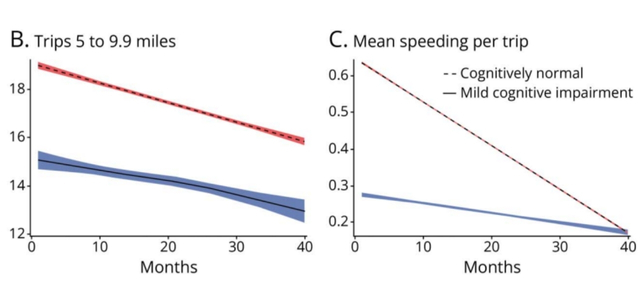
The researchers analyzed data on 56 individuals already diagnosed with MCI (a precursor to Alzheimer's disease), comparing them to 242 people of a similar demographic with no cognitive issues. The average age of all participants was 75.
The team looked at driving patterns logged automatically by the volunteers' vehicles across a study period of up to 40 months, together with results from well-established tests, including tasks related to memory, attention, and executive function.
Even after adjusting for factors including age, education, and genetic risk of Alzheimer's, the group with MCI showed differences in their driving over time: they drove less often, to fewer places, via simpler routes, while speeding less.

An analysis of the driving data on its own correctly identified individuals with MCI 82 percent of the time. While the researchers suggest some of this is down to the self-regulation that tends to happen as people get older, it also has promise as an early sign of cognitive decline.
"Looking at people's daily driving behavior is a relatively low-burden, unobtrusive way to monitor people's cognitive skills and ability to function," says Babulal.
While it's easy to go into autopilot when driving, especially if you've been on the road for many years, it actually requires a lot of brainpower and coordination, which is part of the reason why distractions are so dangerous.
The researchers plan to test their hypothesis on larger, more diverse groups of people, while adding in other data that might play a role, such as vehicle type, geographical area, and other medical conditions.
"This could help identify drivers who are at risk earlier for early intervention, before they have a crash or near-miss, which is often what happens now," says Babulal.
"Of course, we also need to respect people's autonomy, privacy, and informed decision-making and ensure ethical standards are met."
The research has been published in Neurology.