People with autism may be up to six times more likely to develop Parkinson's disease in later life. New research offers a potential explanation based on the role of transporter molecules that recycle unused dopamine in the brain.
Dopamine is a neurotransmitter crucial for managing movement and executive functions, and for reinforcing behavior. It's well known that Parkinson's is characterized by a drop in dopamine levels, while disruptions in the transport of the chemical have also been linked to autism.
With that context, researchers led by a team from the University of Missouri in the US took a novel approach using a technology known as a DaT SPECT scan, which is typically used to diagnose Parkinson's in much older people.
"There has been previous work looking into the total amount of dopamine in the brains of people with autism, but we took a new approach by looking at abnormalities in terms of how dopamine is processed in a specific part of the brain called the basal ganglia via these dopamine transporters," says senior author David Beversdorf, a neurologist from the University of Missouri.
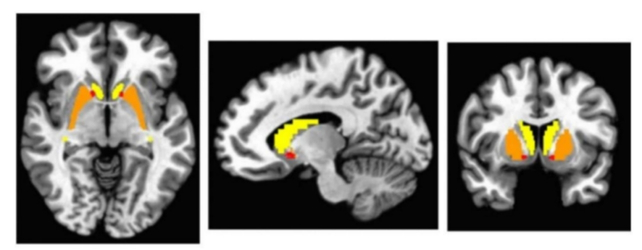
Brain scans on 12 young adults with autism, aged 18-24, revealed abnormal dopamine transporter behavior in two of the 12 participants, with "possible abnormalities" spotted in another two. This means the transporters weren't as uniformly abnormal or asymmetric as expected.
However, no noticeable decreases in brain region connectivity were found between the young adults showing dopamine transporter irregularities and the rest of the group – in fact, there was increased functional connectivity between some areas for those whose dopamine transporters weren't working in a completely standard way.

At this stage, it's not clear what these changes in dopamine transporter function and spread might actually mean for the brain. Further tests revealed no significant differences in IQ and repetitive behavior tests between those whose scans were flagged for abnormalities and those who weren't.
It's also far too early to say that the abnormalities in dopamine transport seen here mean that any of these individuals will go on to develop Parkinson's. What this study does show is that a significant factor relevant to the disease may emerge decades before Parkinson's takes hold.
"While the loss of these dopamine transporters can be biomarkers for Parkinson's disease, no one had ever thought to look at them in the context of young adults with autism, so hopefully this work can help us explore if there is a potential link going forward," says Beversdorf.
There's a lot of scientific work going into finding early signs of neurodegenerative diseases such as Parkinson's and Alzheimer's. The hope is that simpler, faster, more reliable tests can be developed for spotting these conditions as early as possible.
Not only does that mean people at higher-risk can start preventative treatments or measures earlier, but it also allows researchers to study how these diseases get started and begin to develop, which can then lead to new treatment approaches.
Related: Nanoparticles Reverse Parkinson's in Mice by Healing Damaged Dopamine Cells
Now that these DaT SPECT scans have been tried on younger people, the researchers are keen to investigate this possible dopamine transporter link on larger groups of volunteers, which will give them much more data to analyze.
"While it's too early to jump to conclusions, hopefully our work raises awareness about the importance of monitoring the brain health of young adults with autism as they age," says Beversdorf.
"The earlier we can identify those who might be at greater risk for getting Parkinson's disease down the road, the sooner we can discuss preventative measures, including whether certain medications could potentially slow down the progression of disease."
The research has been published in Autism Research.