For more than 180 years, scientists have hypothesized that the ancestors of mammals laid eggs, but haven't found any fossils to prove it.
Now, paleontologists finally have some tantalizing evidence to back up those long-held suspicions.
Around 250 million years ago, a tusked, pig-like pre-mammal called Lystrosaurus rose to prominence among the ashy molten landscapes, acid rain, and poisoned seas of Earth's most severe extinction event, known as the Great Dying.
Lystrosaurus survived that tumultuous period, possibly because it laid eggs, the new analysis suggests. It's a long-awaited discovery that could answer a scientific mystery spanning decades, and casts egg-laying as a key survival strategy for this group of animals.
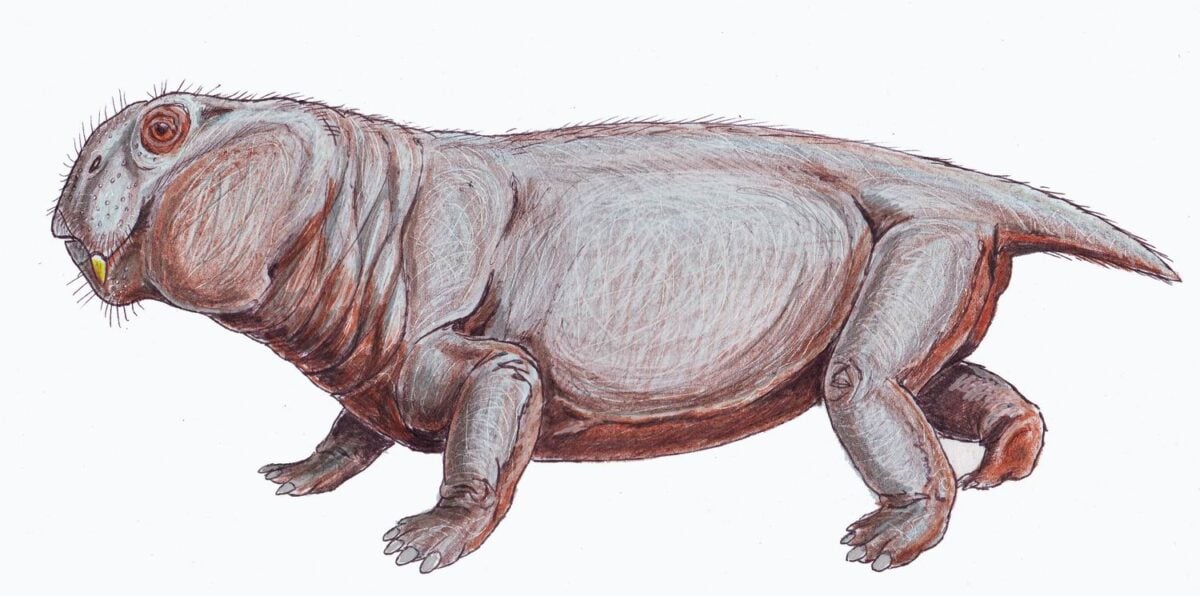

In the new study, an international trio of scientists examined three fossilized, nearly born or newborn Lystrosauruses, including one that appears to have died in an egg laid many eons and multiple mass extinctions ago.
Some 250 million years after it was preserved, the baby Lystrosaurus had to wait almost another two decades to 'emerge' from its long-disintegrated shell.
Paleontologist John Nyaphuli found the preserved baby Lystrosaurus in 2008 in South Africa's semi-arid Karoo region, but the technology to reveal its delicate contents, including tiny flecks of bone, has only recently materialized – in the form of advanced tomography at the European Synchrotron Radiation Facility in France.
Normally, it might not seem prudent to place such a rare specimen anywhere near a particle accelerator. But synchrotron tomography non-destructively uses X-rays produced by rapidly accelerated particles to image the tiny, inner structures of fossilized bones, for example, in three dimensions.
It was clear to scientists long before they imaged the specimens that one was "a perfectly curled-up Lystrosaurus hatchling," says Jennifer Botha, a paleontologist at the University of Witwatersrand in Johannesburg, South Africa and co-author of the study.
"I suspected even then that it had died within the egg, but at the time, we simply didn't have the technology to confirm it."
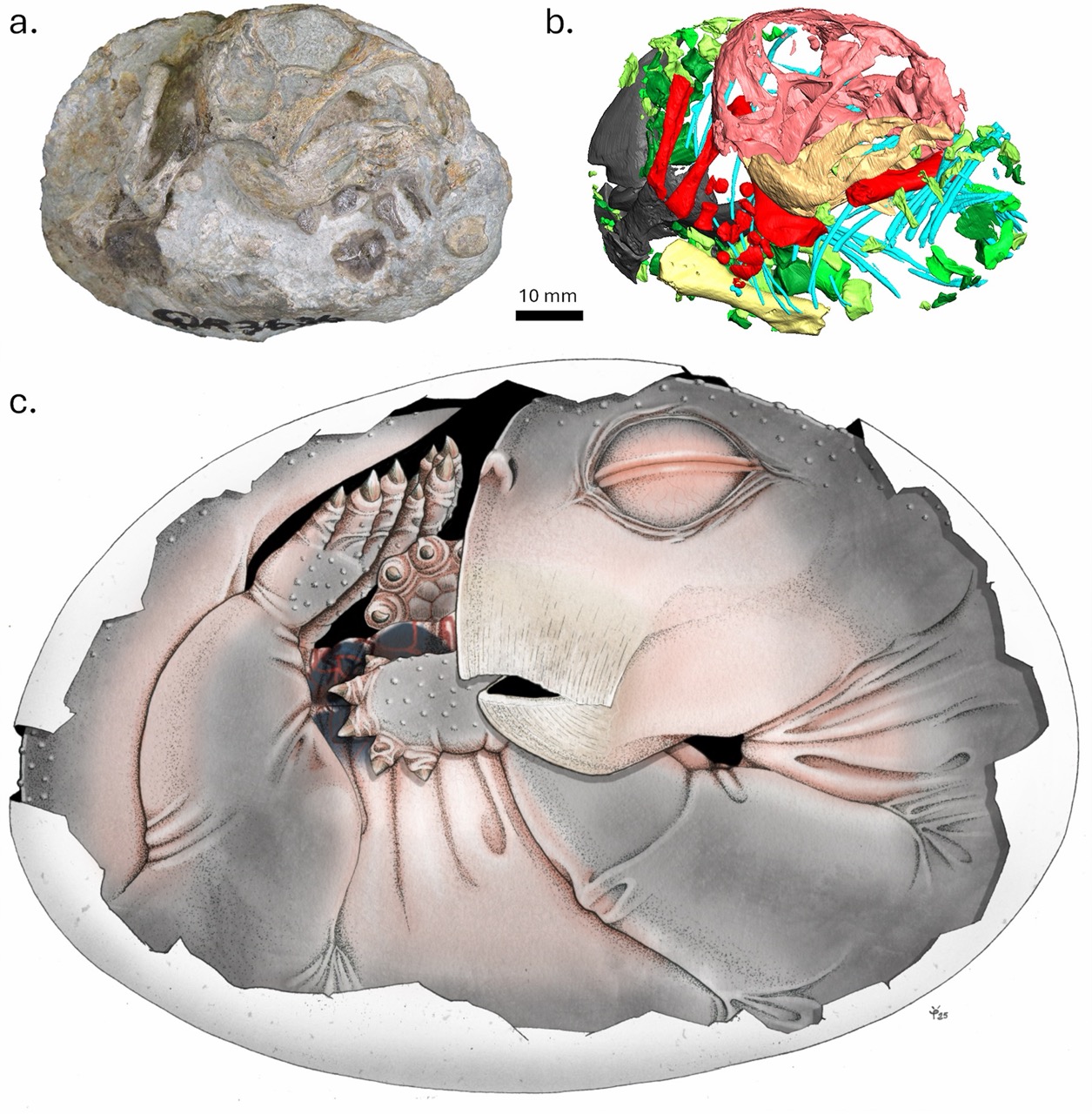
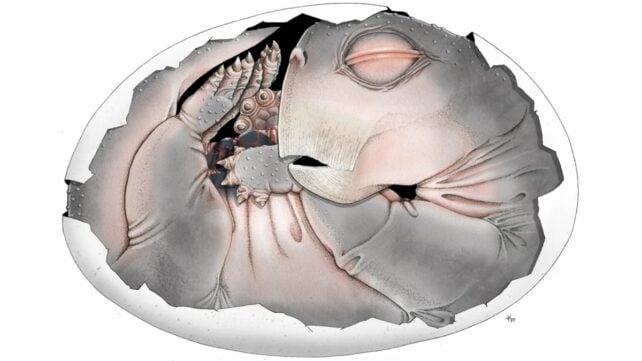
While none of the eggshell remains, the nodule in which it was preserved seems about the right size for a Lystrosaurus egg, and its curled-up posture outlines an ovoid shape.
Scans revealed that the little Lystrosaurus' lower jaw isn't fused, similar to that of modern baby birds and turtles before they hatch, suggesting that this baby died while still cocooned in its egg.
What's more, its bones and cartilage appear to have been too weak to support its weight, unlike the two other newborn Lystrosaurus specimens analyzed.
Botha and colleagues suggest Lystrosaurus' eggs may have been soft and leathery, rather than hard like dinosaur eggs, of which many fossils exist.
So, why did this dumpy, herbivorous mammal ancestor flourish during the Great Dying while more ferocious creatures foundered?
Past research has suggested Lystrosaurus were adaptable: there's evidence that some members of the genus found in icy climates used a strategy some modern mammals use to evade environmental pressures: hibernation.
The new work points to its oviparous ability as a key survival strategy.

Lystrosaurus seems to have laid large eggs for its body size, and larger eggs would have been less prone to drying out in a harsh, drought-stricken environment.
Larger eggs also indicate that Lystrosaurus hatchlings were likely large and precocial – able to feed and fend for themselves, escape predators, and reach reproductive maturity more quickly.
Moreover, the size of its eggs suggests Lystrosaurus did not produce milk for its young, which were well-nourished by large yolks before they hatched.
Survival aside, the findings strengthen ideas scientists already had about the origins of lactation. It may not have begun as a way to feed babies, "but as skin secretions used to either moisturize the eggs, provide nutrients, protect them against fungi and bacterial infections, or for hormonal signaling through the egg membrane," the researchers explain.
Related: 250-Million-Year-Old Fossil Reveals Origins of Our Unique Hearing
All told, the study suggests that Lystrosaurus survived Earth's almost-endgame by growing up fast and reproducing young, which gave it an advantage in the aftermath of the Great Dying.
"Lystrosaurus occupies a pivotal position for understanding how reproductive strategies shaped survival during this extinction," the researchers conclude.
The study was published in PLOS One.