
It's well established that being overweight or obese increases cancer risk, but a new study adds some valuable fine print to that association.
The age at which you put on weight matters, and differs for men and women.
Researchers from several institutions in Sweden analyzed previously collected health data from just over 630,000 individuals. These participants had several weight measurements recorded between the ages of 17 and 60.
Those weight statistics were then compared with cancer cases across the study group to identify patterns, and several associations stood out.
"Most studies on body weight and cancer have focused on weight at a single point in time – typically in mid-to-late adulthood – or on weight changes between two points," write the researchers in a preprint, which is yet to be peer-reviewed.
"Associations between life-course weight trajectories based on multiple weight assessments and the risk of developing cancer remain less explored.
"Since the timing and extent of weight changes vary across individuals, it may however be important to consider weight changes continuously rather than at one or two time points."
Gaining weight quickly at any time in life was linked to an increased risk of several cancers: primarily liver cancer and esophageal adenocarcinoma for men, endometrial cancer for women, and renal cell carcinoma and pituitary tumors in both sexes.
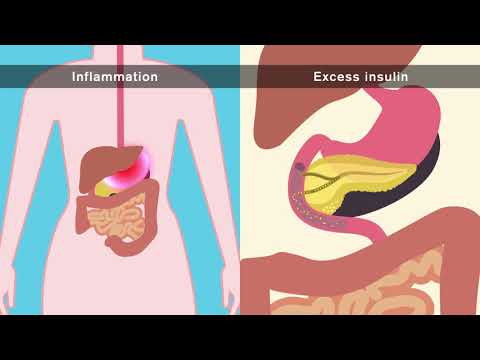
For men, cancer associations were stronger for weight gain that happened before the age of 45, most clearly for esophageal and liver cancer.
Chronic inflammation, insulin resistance, and gastroesophageal reflux disease (GERD) could potentially play a role here.
For women, weight gain after age 30 seemed most dangerous, perhaps due to hormonal changes women experience as they go through middle age, the researchers suggest.
For some cancers, including pancreatic cancer, the risk of developing them was most closely tied to the weight a person was at age 17, rather than when or how much their weight changed afterward.
Another finding that emerged from the data was that the earlier someone developed obesity, the higher their cancer risk usually was.
Overall, it's a subtly nuanced picture – someone's sex, the age when they gain weight, the speed they put the pounds on, and the type of cancer are all important variables.

"By distinguishing between initial adult body weight and subsequent weight change, and allowing weight dynamics to vary across age intervals, our analyses provide a more nuanced understanding of how adiposity over the life course relates to cancer risk," write the researchers.
It's certainly a more comprehensive picture of the connections between weight gain and cancer than we've had before, though observational data like this doesn't prove cause and effect, and the data lacked some details.
Several key factors, including the participants' diet and exercise routines, couldn't be adjusted for (and may have influenced some of the patterns).
These findings also connect to a related study published earlier this year, from some of the same researchers, that shows the timing of weight gain matters for mortality risk – as well as for cancer risk, as shown here.
As far as improving treatment options and boosting public health are concerned, it's not just that reducing obesity levels reduces cancer risk (though it does) – it's more complicated than that.
The team wants to see future cancer prevention efforts tailored to a person's sex and age.
Related: Scientists Identify The Most Dangerous Time in Life to Gain Weight
"Both early adult body weight and weight gain across adulthood were associated with the risk of most established and some potentially obesity-related cancers, with heterogeneity by cancer site, sex, and timing of weight gain," write the researchers.
"In the context of the rising prevalence of obesity and cancer in Western countries and globally, the findings highlight the importance of a life-course perspective on weight management for cancer prevention."
The research has been presented at the European Congress on Obesity, and a preprint is available on medRxiv. It has not yet been peer-reviewed.