
Catching Alzheimer's early means a better opportunity for it to be studied and for treatments to be tried. Researchers have now discovered more evidence that, for some women, poor sleep may be an early sign of the disease.
The relationship between sleep and Alzheimer's is difficult to untangle.
We know that poor sleep quality increases Alzheimer's risk, and that Alzheimer's interferes with sleep, likely due to the build-up of tau protein tangles in the brain.
But whether poor sleep is a risk factor or a symptom of Alzheimer's disease remains unclear.
To try to tease apart those links to find what starts the decline, a team from several US institutions focused on older women with a genetic predisposition to the disease (that Alzheimer's is more common in women is also well established).
Worse sleep, as reported by the participants, was linked to poorer visual memory performance in tests, and greater tau protein accumulation in Alzheimer's-related brain areas.
But, crucially, these associations were found only in women in the highest tier for genetic risk of the disease, suggesting an association with the disease specifically rather than just the wear and tear of aging.
Further research will be needed to know for sure, but the suggestion is that disrupted sleep could indicate someone is at a greater risk of developing Alzheimer's, before more serious symptoms emerge.
"Sleep complaints may represent a promising Alzheimer's disease risk factor," write the researchers in their published paper.
"Improving sleep may be a potential intervention target for Alzheimer's disease mitigation and prevention, particularly for older women."
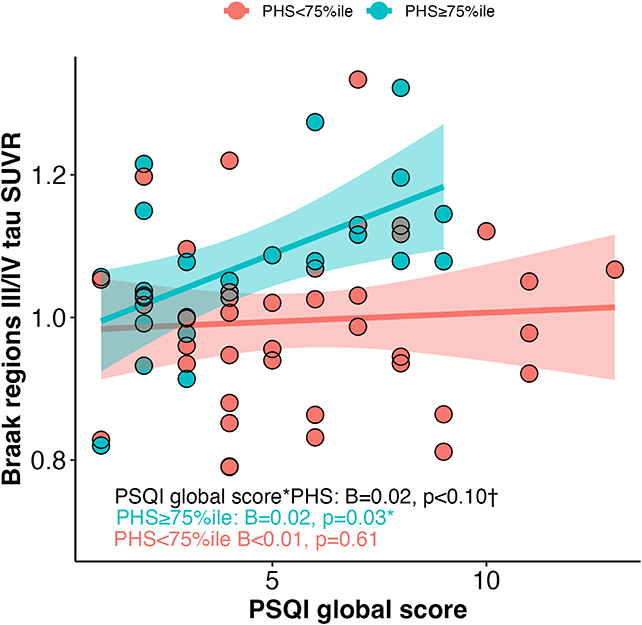
The analysis involved 69 women aged 65 or over, who were asked to complete questionnaires about their sleep (including sleep duration, efficiency, and latency), and were given standardized memory tests.
Sixty-three women also had brain scan data measuring tau accumulation in specific brain regions.
The participants weren't followed over time, limiting the causal conclusions that can be drawn, but the association between poor sleep, lower visual memory scores, and excess tau in the most genetically at-risk group remains significant.
The researchers are planning to repeat the analysis once data collection is complete.

There are caveats to mention.
Only certain brain sections linked to Alzheimer's showed an association here, and only visual memory (the recall of shapes and spaces) appeared to be affected – verbal memory (recalling information that we've heard or read) showed no change.
And when the researchers removed women with pre-existing sleep disorders, the association disappeared.
Another unexpected finding from the study complicates the picture: Women in the lower genetic-risk group (among this higher-than-normal risk cohort) actually reported worse sleep quality.
But in that group, poor sleep was not linked to the same pattern of visual memory and tau changes.
"Perhaps, in the higher genetic risk group, we may be capturing a discrepancy between self-reported and objective sleep measures, whereby those with mild cognitive impairment tend to overestimate their subjective sleep, possibly reflecting anosognosia or memory recall deficits, early clinical symptoms of Alzheimer's," write the researchers
Unlike many Alzheimer's risk factors, sleep is a variable that's more modifiable than depression (a risk factor for dementia) or our genetics, for example.
In the context of previous research, the findings here suggest that adopting a better sleep routine and improving sleep quality could help mitigate some of the genetic risk of Alzheimer's, though that's mostly outside the scope of this study.
What this discovery does tell us is more about the link between poor sleep and Alzheimer's – and how variable risk factors can be between individuals. Given that sleep quality can be self-reported, without expensive tests, it's something researchers are sure to investigate further.
Related: This Gene Is Linked to Lower Alzheimer's Risk – And We May Finally Know Why
"Emerging evidence points to a bidirectional relationship between sleep disturbances and Alzheimer's disease," write the researchers.
"Poor sleep may be an overlooked risk factor for older women, who are disproportionately affected by Alzheimer's disease and report worse subjective sleep quality than men."
The research has been published in the Journal of Prevention of Alzheimer's Disease.