
ADHD comprises a set of symptoms that affect our already unique spheres of awareness.
This neurodevelopmental condition may present as difficulties with attention, impulse control, or hyperactivity.
It's estimated that 5 percent of children and up to 4 percent of adults have ADHD (Attention Deficit Hyperactivity Disorder) globally, and reported diagnosis rates have risen sharply over the last 40 years.
Since our bodily systems are interlinked in surprisingly intricate ways, science is constantly uncovering associations between ADHD and other biological functions.
In fact, scientists recently presented new evidence that people with ADHD have significantly higher odds of experiencing gastrointestinal (GI) symptoms.
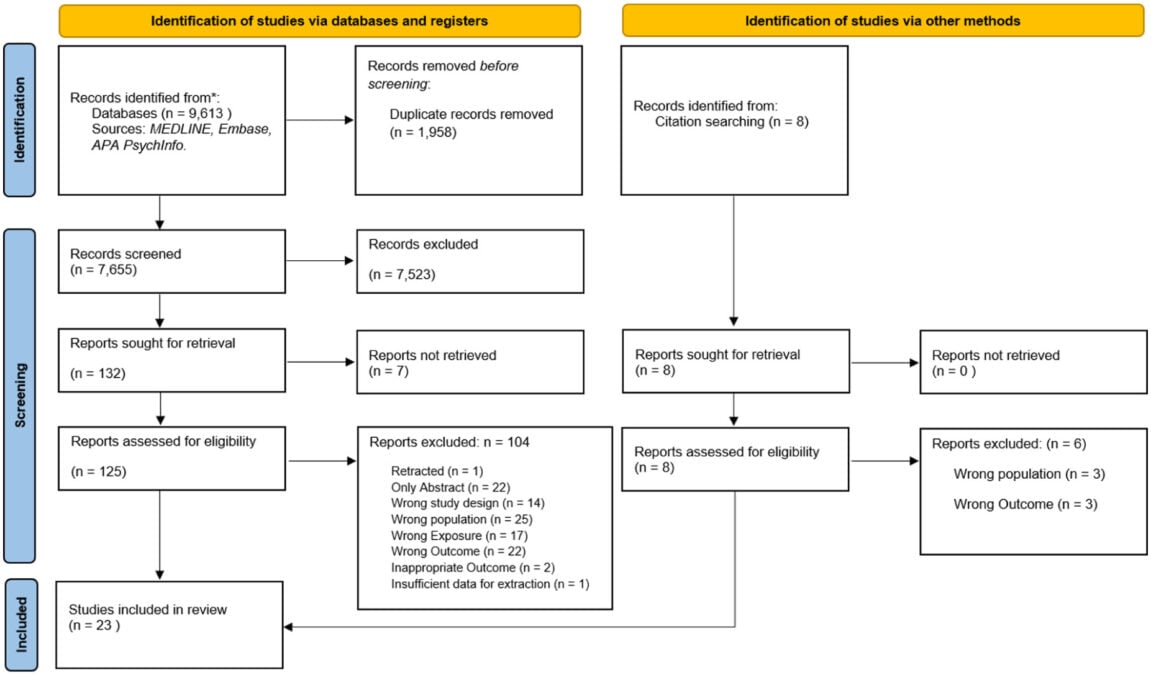
In a first-of-its-kind study evaluating this under-explored association, Warwick Medical School researchers Sarah Blake, Hugo Cannon, and Saran Shantikumar conducted a comprehensive systematic review and meta-analysis.
They included data from nearly two million people across more than 20 studies worldwide, with sample sizes ranging from 50 to almost 750,000 participants.
"Almost every gut symptom we looked at: constipation, IBS, even indigestion, appeared to be associated with ADHD," explains Sarah Blake, the study's co-lead author.
"These symptoms can have a real impact on daily life, but they could easily be overlooked if the focus is on ADHD itself."
The researchers say that, overall, ADHD diagnosis was associated with a 48 percent increase in the odds of having GI symptoms, compared with the "neurotypical population."
They also explored the prevalence of specific issues.
For example, the odds of having dyspepsia - the indigestion from which Pepsi reportedly derived its name – were 52 percent higher for individuals with an ADHD diagnosis.
Ascending the statistico-symptomatic ladder, an ADHD diagnosis was associated with a 58 percent increase in the odds of irritable bowel syndrome (IBS).
Abdominal pain odds increased by 88 percent, though, presumably, not the type of abdominal pain that results from one's intestines tying themselves into a knot.
The odds of constipation were almost doubled, displaying an increase of 97 percent. The odds of diarrhea more than doubled, with a 118 percent increase.
Encopresis, or the loss of bowel control, displayed the highest increase, of 332 percent, or over four times the prevalence compared with neurotypical individuals.
Finally, in terms of unspecified stomach and bowel issues, those with an ADHD diagnosis were almost twice as likely to experience such potentially mysterious maladies, with an increase of 82 percent.
Several explanations are possible. It may be that ADHD-related traits, like heightened stress reactivity, can increase GI sensitivity.
Impulsive eating patterns and inconsistent mealtimes are also frequently observed behaviors for people with ADHD, and these irregular dietary habits are independently linked to dyspepsia, bloating, and constipation, among other GI symptoms.
The researchers also identify a behavioral-diet-microbial pathway.
Impulsivity is associated with an altered gut microbiome, perhaps because some people may make dietary choices that, say, favor sugary drinks and lack fiber, which appears essential for reducing various health risks and feeding beneficial bacteria (the fiber, not the soda, sadly).

Sensory processing differences may also reduce dietary variety, which can alter bowel activity and cause issues like constipation.
Additionally, medications may contribute to GI issues. Sleep disturbances can also affect motility, immune responses, and underlying intestinal vulnerabilities.
Intriguingly, these results are in accordance with findings that link other neurodevelopmental conditions with GI issues – a critical avenue for recent research.
The increasingly elucidated (but still vastly enigmatic) gut-brain axis has revealed that our guts and brains are more intricately linked than many could have imagined.
Indeed, gut bacteria have recently been highlighted as a possible culprit in the development of obsessive-compulsive disorder (OCD).
Similarly, and as the researchers mention, people with neurodevelopmental conditions may have distinctive differences in gut microbe populations – some of which are shared – which can lead to systemic consequences like inflammation.

Notably, the gut-brain axis may be strongly influenced by the vagus nerve, the longest cranial nerve, which creates a bidirectional pathway through the body, like a major electrical highway
This nerve – linked to conditions like depression – is directly influenced by chemicals made by gut microbes, and its activity also influences GI inflammation.
As a result, gut dysbiosis in people with ADHD could result in increased inflammation, leading to the GI symptoms reported in this research.

Future work could explore the biological mechanisms underlying microbiome variations, another pivotal scientific focus in recent times.
They could also probe the chicken-and-egg causality of whether GI issues precede ADHD diagnosis, or follow as a result of its development and treatment.
Related: Your Poop Schedule Says a Lot About Your Overall Health, Study Reveals
Finally, clinicians should ask patients with ADHD about potential GI symptoms, so that these quality-of-life issues are not overlooked, suggests Shantikumar, the Associate Clinical Professor at Warwick and the study's senior author.
Still, much mystery remains, he concludes:
"We can't yet say ADHD causes these gut problems, or exactly what is driving the link, but the pattern is striking enough to warrant attention."
This research was published in the Journal of Attention Disorders.
This article was fact-checked by Rebecca Dyer and edited by Rebecca Dyer. While we pride ourselves on our process, we are only human. If you spot a mistake, please let us know.