As the famous lullaby attests, the diamond-like stars above have always been our companions.
And with recent astronomical advances, we can explore a pressing existential enigma: do these same stars shine down upon alien beings?
To that end, the search for hospitable worlds depends on two primary criteria: finding planets that are both Earth-like in composition and situated within their star's habitable zone, where liquid water can exist.
Astronomers have been detecting exoplanetary atmospheres for more than 20 years. Yet only on wildly un-Earth-like planets that are large, gas-bloated, and highly irradiated – akin to bizarro Jupiters glimpsed through fire-and-brimstone-tinted glasses.
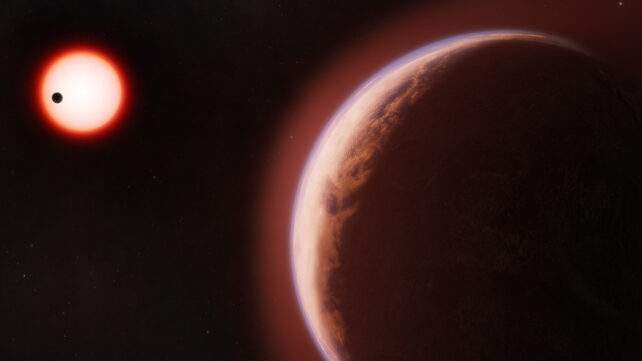
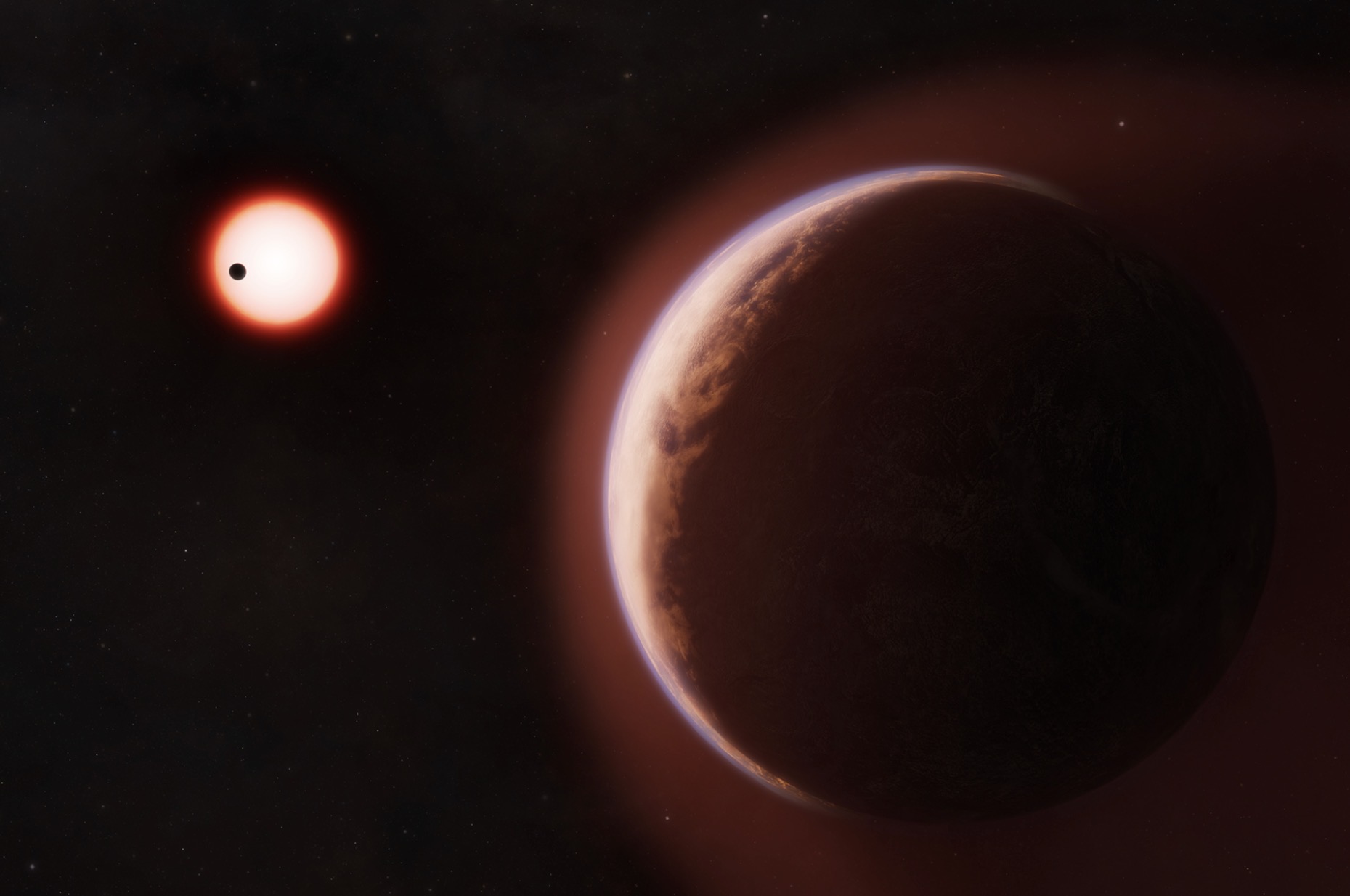
But now, astronomers have finally detected an atmosphere on an extensively studied, potentially habitable 'super-Earth' named LHS 1140 b.
"This is the first time anyone has found an atmosphere on a rocky planet in the habitable zone of another star," says Collin Cherubim, a planetary scientist at Harvard University and lead author of a new study published in Science.
LHS 1140 b is measured to be more than five times the Earth's mass and 1.7 times its radius. This is consistent with a rocky, Earth-like composition and a low-density complement, such as a thin atmosphere and perhaps some water.
Additionally, LHS 1140 b is a prime target because it's part of a system that's located just about 50 light-years away, orbiting a red dwarf star that's about one-fifth the Sun's mass and size and is significantly cooler.
"Twenty years ago we wondered whether other terrestrial-type planets even existed," explains Robin Wordsworth, a planetary scientist at Harvard University, as well as one of the study's co-authors.
"Then we learned they're common, and found some in the habitable zone. The next question was whether any of them had managed to keep an atmosphere. Now we know at least one has."
Previously, Cherubim had predicted the existence of LHS 1140 b's helium atmosphere, using a from-scratch computer model of a process known as mass fractionation.

His model, developed with the guidance of Wordsworth, "showed that planets in a sweet spot can lose their hydrogen and keep their helium, creating a helium-dominated atmosphere: planets I call 'helium worlds'," Cherubim told ScienceAlert.
"This is a newly predicted class of planets that I have argued may not be so exotic, but instead may be a natural step in the evolution of many small planets."
"I wanted to test that prediction, so I looked for escaping helium and found it!"
To do so, the researchers used the WINERED spectrograph at the Las Campanas Observatory in Chile's Atacama Desert to view LHS 1140 b, and its sibling planet, on a serendipitous September night in 2024 when both bodies crossed in front of their star.
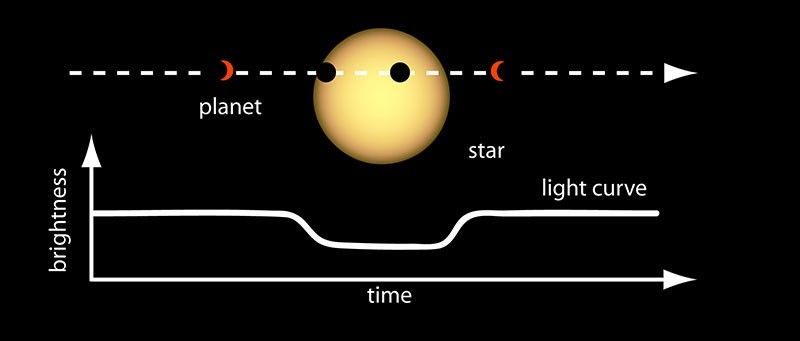
Like sunshine streaming through a puff of cotton candy or a sudsy beverage, the researchers could then see which wavelengths of light were absorbed by the planetary atmospheres.
They found that LHS 1140 b (but not its sibling) showed signs of a helium atmosphere, escaping into space at a rate of hundreds of thousands of kilograms per second.
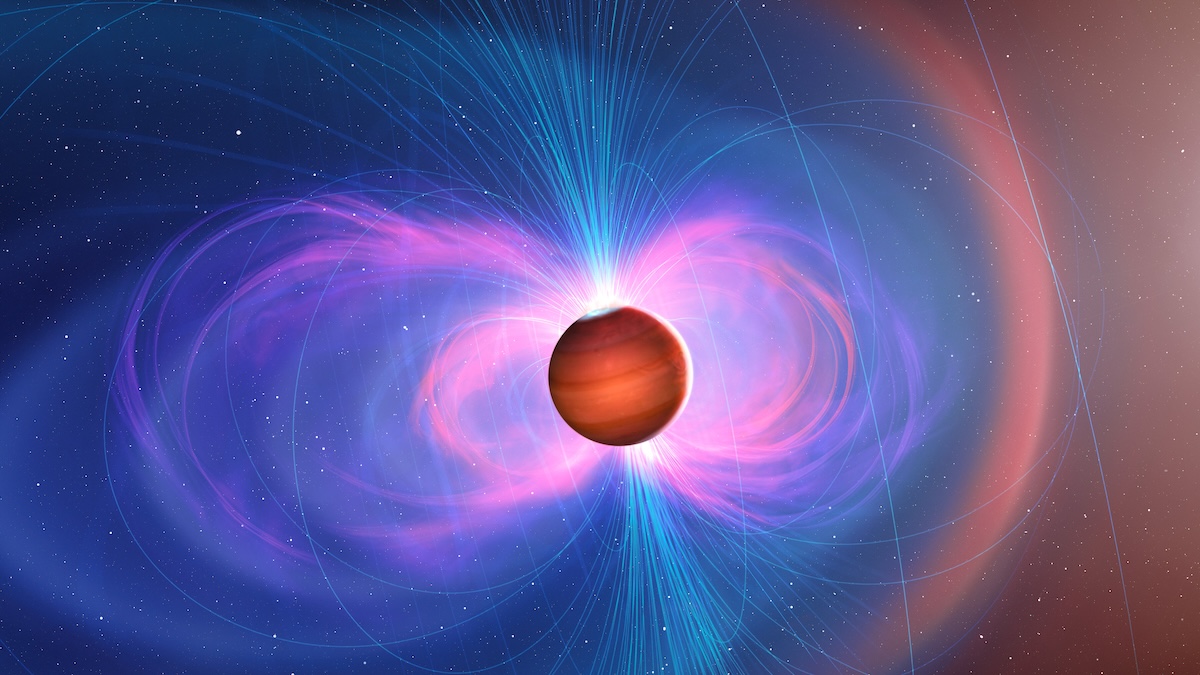
This outflow, heated to more than 4,700 degrees Celsius (8,500 degrees Fahrenheit) by stellar radiation, is likely facilitated by stellar winds or magnetic interactions between the planet and star. It also appears to be variable, as the researchers did not detect it when they observed the planet again in 2025.
Surprisingly, the LHS 1140 b has held onto this atmosphere for more than 3 billion years, despite the violent reputations of red dwarfs.
"The planet receives 42 percent of the energy from its star that Earth does from the Sun," Cherubim told ScienceAlert.
"So even though it experienced higher levels of X-ray and UV radiation throughout its history (which tends to strip rocky planetary atmospheres), it has held onto some helium that it likely accumulated during formation."
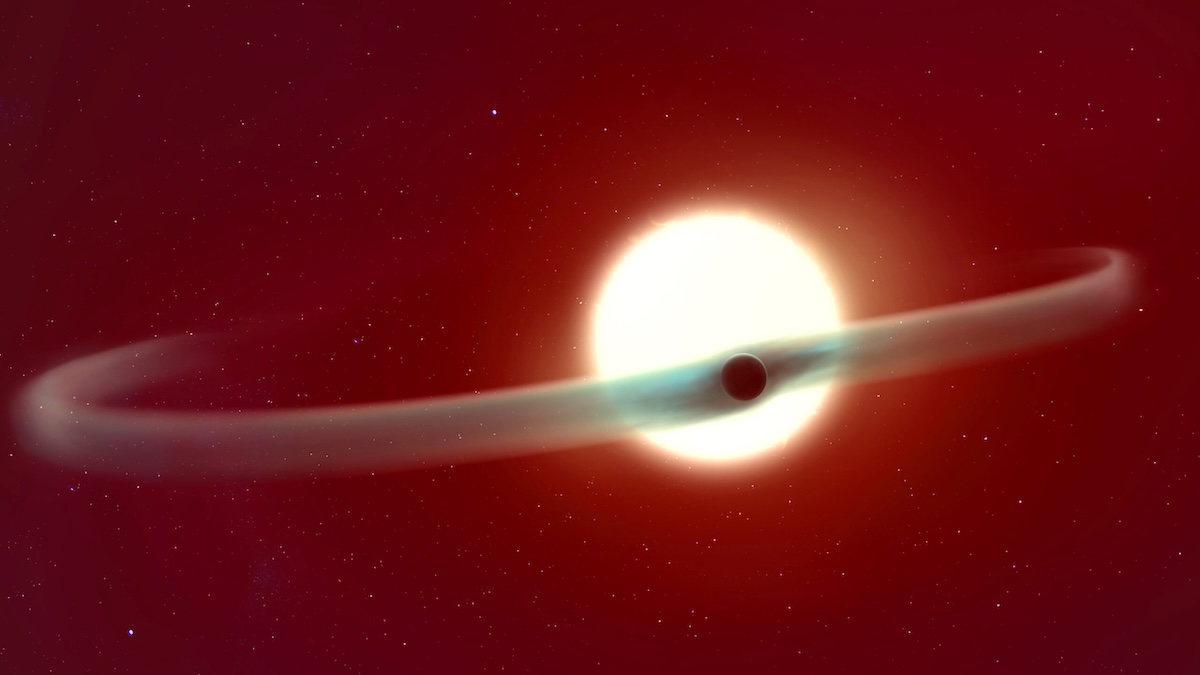
"My models indicate that even with higher levels of radiation in the past, the planet is far enough away from its star that it is expected to have maintained much of its primordial helium."
Thus, the onus shifts to further characterizing this intriguing planet to reveal whether it has oceans or other life-friendly features.
Related: Astronomers Accidentally Photographed The Faintest Planet Ever Imaged From Earth
Such methods can also inspire the discovery of additional atmosphere-swaddled worlds, perhaps even other Earth-like planets swirling around the habitable zone of calm stars.
Finally, the fact that this discovery was made using a ground-based telescope shows that these observatories can be just as instrumental as the James Webb Space Telescope (JWST) in sniffing out alien atmospheres.
"This has been a model validation, and hopefully it's just the first of many more observations to come," Cherubim concludes.
This research was published in Science.
This article was fact-checked by Clare Watson and edited by Rebecca Dyer. While we pride ourselves on our process, we are only human. If you spot a mistake, please let us know.