
People who enjoy a cheeky drink every now and then usually do so knowing that it's not particularly good for their health.
Like with so many vices, moderation seems to be key.
But increasingly, research suggests that when it comes to alcohol, there may be no 'safe' threshold for consumption.
A comprehensive new review highlights the health problems of even small amounts of alcohol.
Led by a team from the University of Washington in the US, the research investigated the relationship between booze and 20 important health outcomes.
The findings about cancer were particularly notable: Drinking alcohol seemed to increase the risk of all 10 cancer types the team studied – even if it's less than one tipple a day.
High alcohol consumption was associated with increased risk across all 20 of the analyzed health conditions, which as well as cancer included type 2 diabetes, Alzheimer's disease, heart disease, and respiratory infections.

The research reviewed 843 previous studies between 1963 and 2023, and assigned a 0 to 5 star rating to grade the strength and consistency of the relationship between alcohol and each health condition, based on the available evidence.
"The science on alcohol and health is genuinely complex," says health economist Emmanuela Gakidou, from the University of Washington. "For cancer, the evidence is consistent and unambiguous: risk rises with any level of alcohol intake."
The reviewed studies covered 10 cancers in total, with harmful links to booze found for all of them. Generally, higher levels of drinking corresponded to higher risk.
Even low consumption – less than one drink a day – was associated with an increased chance of developing pharynx, colorectal, esophagus, breast, liver, pancreas, and prostate cancer.
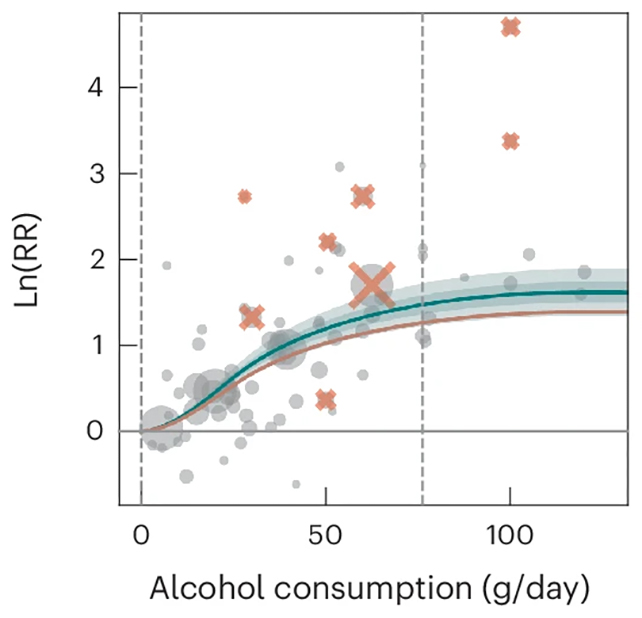
Alcohol use was linked to a higher risk of pancreatitis, cirrhosis, and other chronic liver diseases too. There was also a connection, albeit a weaker one, between drinking and lower respiratory infections and tuberculosis.
With cardiovascular, metabolic, and neurological health issues, the relationship to alcohol was less clear-cut. These conditions were in the 2-star and 1-star categories, and the review found that low-to-moderate alcohol consumption was associated with a lower risk of outcomes such as type 2 diabetes and Alzheimer's.
This is an area of research where we've previously seen conflicting findings about whether drinking in moderation might come with health benefits. Further studies are going to be needed to know for sure.
"For some cardiometabolic and dementia outcomes, studies suggest small reduced risks at low-to-moderate consumption, but those associations became weaker and reversed at higher levels of drinking," says Gakidou.
"Rather than interpreting these results as an endorsement of drinking, they lay out a complex map of where the evidence is strong, weak, or mixed."
There are some limitations to talk about. Drinking habits in the reviewed studies were self-reported, which isn't always the most reliable method of data collection, and there were big variations across the studies in terms of how many other contributing factors (like diet and smoking habits) were considered.

That said, given the scale and comprehensiveness of the research, these are results worth paying attention to. The analysis approach the researchers took here was actually a relatively conservative one, so it's possible that drinking is more harmful than these statistics suggest.
As always, the research needs to be taken in the context of other studies to properly assess the dangers of drinking too much – or at all. Numerous health benefits have previously been observed in people who decide to give up drinking, for instance.
The researchers want to see improved public health messaging that's more honest about the risks that can come with alcohol, and reviews of recommended levels of drinking, which vary from country to country.
Related: Popular Weight Loss Drugs Linked to Lower Risk of Breast Cancer
"Given substantial variation in burden from these diseases across ages and regions, current evidence does not support a universally applicable threshold for alcohol consumption that maximizes health for all," write the researchers in their published paper.
"Instead, public health guidance should be population-specific, considerate of both relative risks across intake levels and the overall burden of these outcomes in populations."
The research has been published in Nature Health.