The prenatal to postnatal development of our brains involves a complex cascade of chemicals, branching brain-signaling pathways, and unfolding neural cells – the evolution of a universe in microcosm.
This incredibly intricate development can lead to potentially debilitating conditions like obsessive-compulsive disorder (OCD) and chronic tic disorders (CTDs), such as Tourette disorder (TD), which affect up to 2 percent of the population.
Yet relatively little has been known about the underlying biological pathologies of these highly heritable disorders: a measly four "high-confidence" genes.
That number has just jumped significantly, as researchers have presented a uniquely detailed genetic analysis of OCD and CTD etiology, identifying 36 genes that substantially increase the risk of developing one or both of these disorders.
This research "dramatically expands the catalog of shared risk genes, reveals biological connections with autism and schizophrenia and highlights the brain circuits that govern impulse control, movement, and habit formation," explains Gary Heiman, a genetic epidemiologist at Rutgers University in New Jersey and one of the study's senior co-authors.
Published in the journal Nature Neuroscience, an immense team of geneticists and neuroscientists, led by researchers at Rutgers University, analyzed newly and previously sequenced exome data – the DNA associated with making proteins, comprising around one percent of the genome – of nearly 4,000 individuals who have OCD, CTD, or both.
This includes over 2,400 parent-child trios and more than 1,500 singletons, nearly a doubling of previous sample sizes.
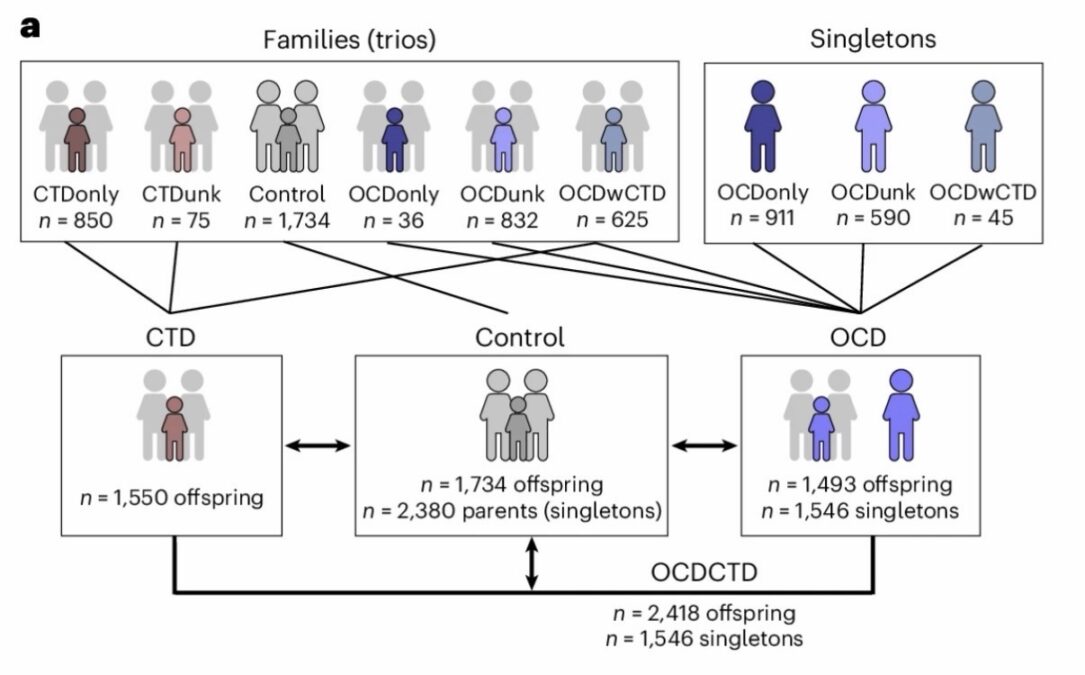
These two conditions commonly co-occur: 50 percent of individuals with CTDs also display obsessive-compulsive behaviors, while up to 30 percent of individuals with OCD display a history of tics.
By also using brain maps from humans, rhesus macaques, and mice for comparison, the researchers outlined a neural blueprint for these conditions based spatially on brain regions, the timeline of risk-increasing gene expression, and affected cell types.
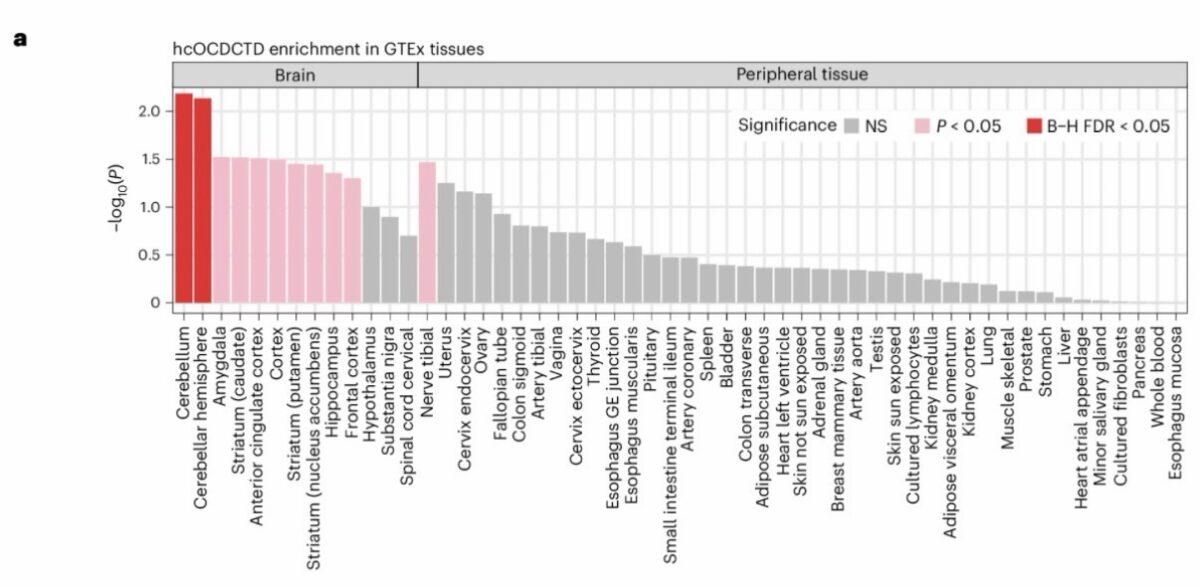
They found further evidence to support that these conditions are mediated by dysfunction in the cortico-striato-thalamo-cortical circuit. This expansive brain loop encompasses regions associated with cognition, impulse control, movement, and data processing.
Accordingly, the researchers found that these brain regions showed increased expression of risk-associated genes present at prenatal and postnatal stages. These include the cortex, striatum, and thalamus.
The cortex is the outer brain layer associated with core functions like thinking, learning, reasoning, and memory; the striatum is a deep brain region that powers decision-making, motivation, and movement; the thalamus is the brain's relay station, processing various signals.
Risk genes are also highly expressed postnatally, in the cerebellum, a coordinator of movements, affecting essential functions like timing and balance.
The researchers implicated a type of cell, called telencephalic projecting excitatory neurons, which are vital for brain signaling and communication across brain regions.
Furthermore, they detected complex interactions between genes and neural pathways.
"These genes don't act individually," clarifies Jay Tischfield, a geneticist at Rutgers University and one of the study's senior co-authors.
"They act in networks. And now you can target whole networks, which will make it easier to design new therapies."
The magnitude may be substantial. The identified genes carry very large effects; the researchers determined they may increase risk 57-fold on average, with up to a 210-fold increase at the extreme end.
What's more, this confirms "substantial genetic overlap between OCD and CTD," the researchers note, as 30 of the 36 identified genes were associated with both OCD and CTD cases.
Finally, the researchers found that some of the risk genes were associated with other neurodevelopmental disorders (NDDs), including autism spectrum disorder, developmental delays, and schizophrenia, strengthening previous links between developmental pathologies.
Importantly, these genes did not show overlap with a control condition, congenital heart disease (CHD), which is also inheritable but independent of neural development.
This work also highlights the importance of retroactive data collection and the crucial long-term commitment made by families who offered their DNA samples.
"When we began collecting these samples 20 years ago, we did not yet have the rapid and cost-effective technologies we have today," Heiman says.
"Families volunteered because they wanted to help scientists understand these conditions. Now, with modern genome sequencing, those samples have become incredibly valuable."

Of course, the ultimate goal is to design better therapies with tailored treatments based on specific genetic or brain pathways, for diverse individuals who have diverse NDDs.
These possibilities are now greater than ever, as the researchers have increased the number of known large-effect risk genes by a factor of ten.
Related: Schizophrenia And Bipolar Disorder Share 70% of Their Genetic Roots, Landmark Study Finds
"In the past we knew about a couple of strong genes, so there were few opportunities for the pharmaceutical industry to develop drugs," Tischfield explains.
"Now you've got over 30 targets, and that opens up new possibilities for treatment development."
This research was published in Nature Neuroscience.
This article was fact-checked by Fiona MacDonald and edited by Fiona MacDonald. While we pride ourselves on our process, we are only human. If you spot a mistake, please let us know.