
This week in science: the choice between tea or coffee could have greater consequences than you think; interstellar comet 3I/ATLAS makes its closest pass to Earth; astronomers track a runaway supermassive black hole; and much more!
Choice of Tea or Coffee Could Influence Risk of Osteoporosis in Older Women

A study on how drink choices affect osteoporosis risk in older women found tea boosted bone strength, while high coffee consumption reduced it.
"Our results don't mean you need to give up coffee or start drinking tea by the gallon," says Flinders University epidemiologist Enwu Liu. "But they do suggest that moderate tea consumption could be one simple way to support bone health, and that very high coffee intake might not be ideal."
Read the full story here.
Alien Comet 3I/ATLAS Made Its Closest Approach to Earth

Interstellar comet 3I/ATLAS made its closest pass to Earth on December 19, providing the best view of it before it leaves the Solar System.
At perigee – that's the closest point in its trajectory to Earth – 3I/ATLAS was around 270 million kilometers (168 million miles) away. That's nearly twice Earth's 150 million-kilometer distance from the Sun, but still close enough for some really juicy observations.
Read the full story here.
Simple Supplement Combo Could Help Fight Deadly Brain Cancer
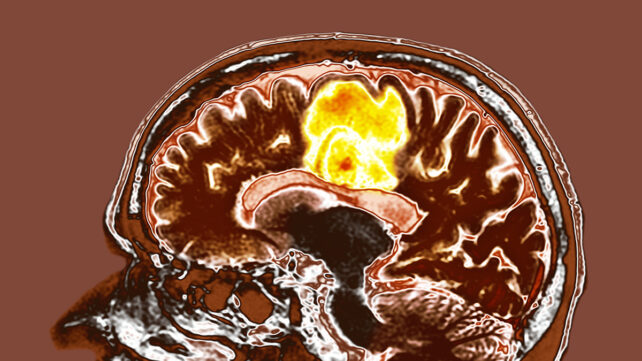
Two simple supplements, resveratrol and copper, were found to have a modest positive effect on a deadly form of brain cancer.
"The cell-free chromatin particles, fragments of DNA released by dying cancer cells, inflame the surviving cancer cells," says cancer surgeon and public health researcher Indraneel Mittra. "This makes the disease more aggressive."
"If you eliminate the cell-free chromatin, which is what the resveratrol-copper tablets do, the cancer is subdued."
Read the full story here.

Scientists Identify 6 Key Depression Symptoms That Predict Dementia Risk

A UK study linked six specific symptoms of depression in middle age to a greater risk of dementia later in life.
"Our findings show that dementia risk is linked to a handful of depressive symptoms rather than depression as a whole," says epidemiological psychologist Philipp Frank.
"This symptom-level approach gives us a much clearer picture of who may be more vulnerable decades before dementia develops."
Read the full story here.
JWST Confirms: First Runaway Supermassive Black Hole Tearing Through Space
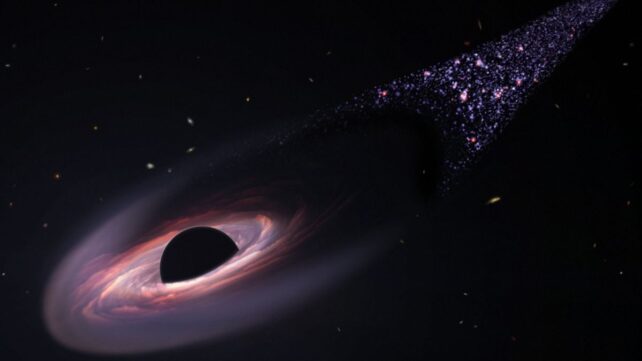
JWST has confirmed the first known runaway supermassive black hole, zipping through space at 954 km (593 miles) per second.
The sheer power behind the gravitational kick required to send a black hole of that mass tearing away that fast through the circumgalactic medium just absolutely boggles the mind.
Read the full story here.
Boosting One Mitochondrial Protein Increases Lifespan And Slows Aging in Mice

Scientists in Japan have found that boosting a protein called COX7RP keeps mitochondria running longer, increasing mouse lifespan.
In the study, male mice engineered to produce extra COX7RP showed a host of differences compared with controls, including a 6.6 percent increase in average lifespan and indicators of an extended healthspan – being able to live healthier for longer.
Read the full story here.